

San Pietro a Maida
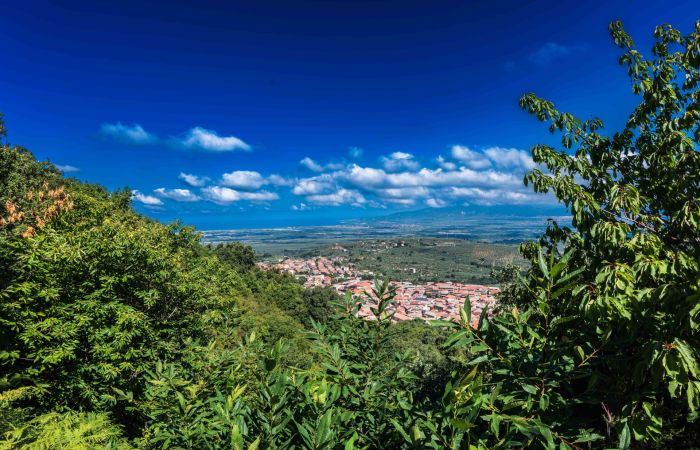
Nel cuore della Calabria tirrenica, tra uliveti e crinali che si affacciano sul Golfo di Sant’Eufemia, San Pietro a Maida si sviluppa su un pianoro a 355 metri sul livello del mare, nell’entroterra del versante tirrenico dell’altopiano delle Serre, dominato dal monte Contessa. Lontana dai circuiti turistici più frequentati, si svela poco a poco agli amanti della natura, con percorsi di mountain biking immersi in un paesaggio di colline rigogliose.
Secondo Gabriele Barrio, il centro abitato sorse nel XVI secolo, quando nella zona si stabilì una colonia di lavoratori impegnati nelle opere di bonifica del vicino territorio di Maida, circostanza che, secondo lo studioso rinascimentale, spiegherebbe anche l’origine del nome. Le sue origini, tuttavia, affondano in un passato più remoto e sfuggente, già intorno all’anno mille il territorio era frequentato dai monaci basiliani, che segnarono a lungo questo tratto di Calabria con insediamenti, in luoghi isolati e lontani dalla costa, dove il rapporto tra paesaggio e spiritualità è ancora leggibile. In questa stessa geografia si inseriscono l’Eremo di Santa Maria del Carmelo e il Cimitero Monumentale.
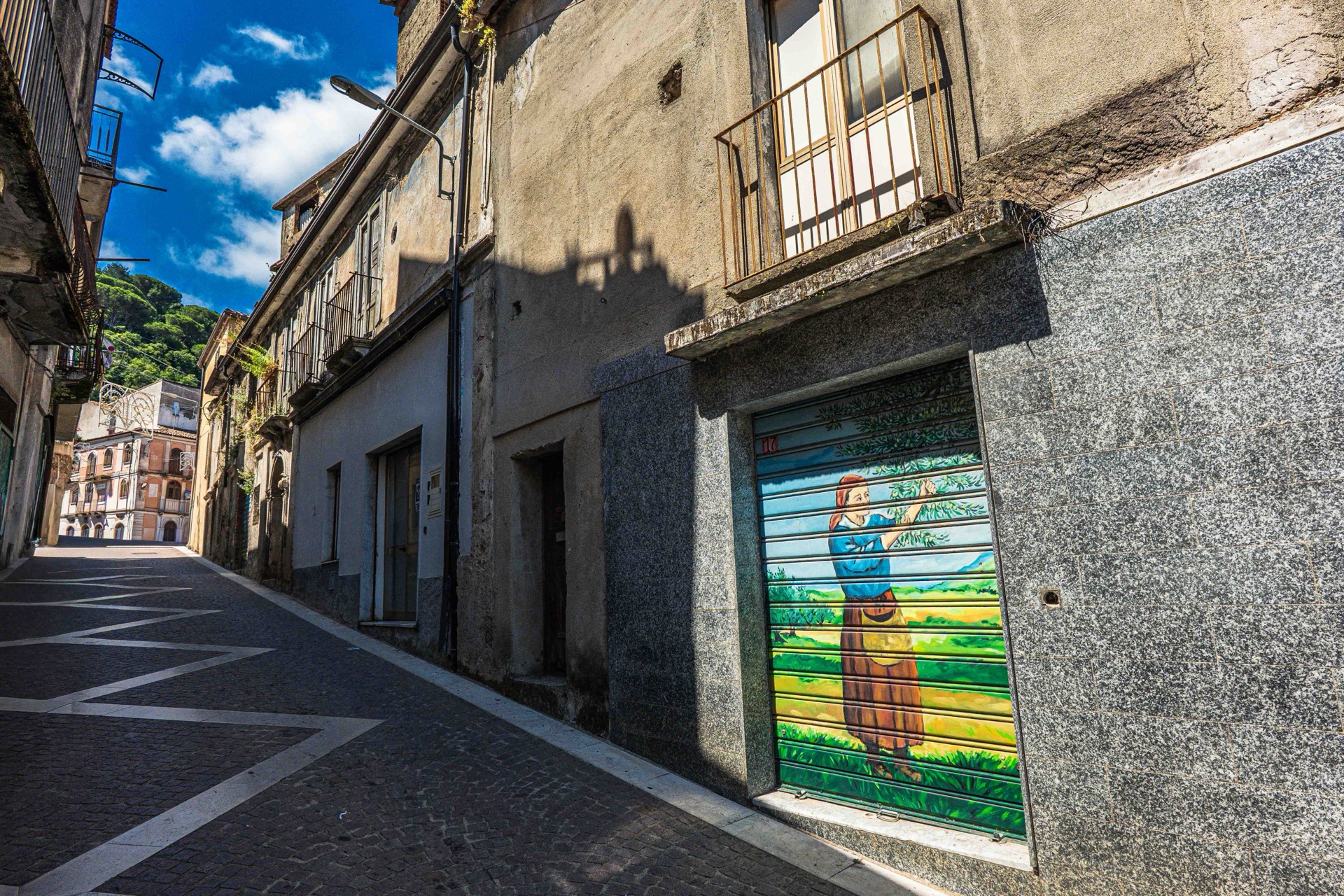
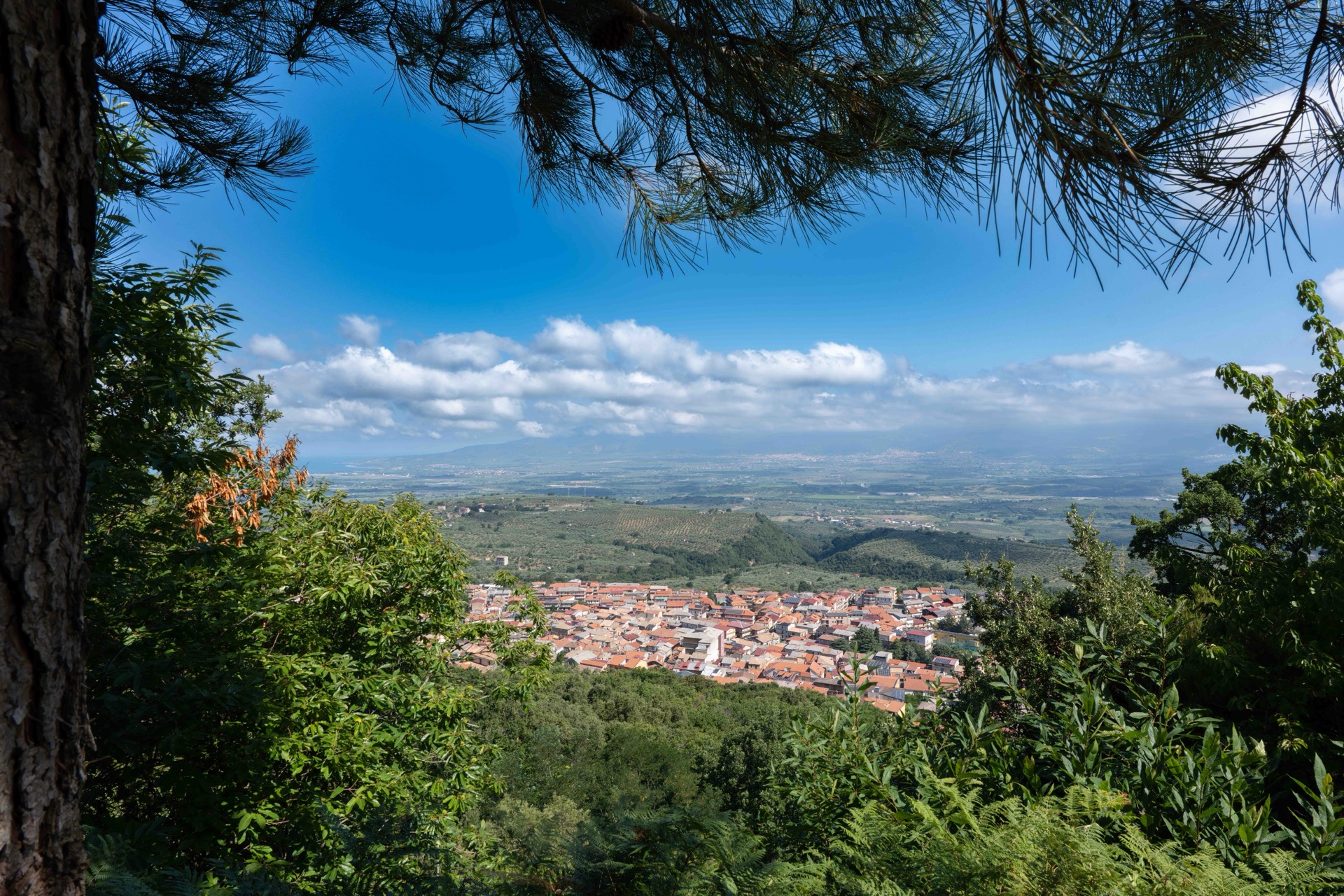
Dal Quattrocento, Sancto Petro de Mayeda cresce come centro agricolo, favorito da una posizione interna che lo ripara dalle incursioni e dalle zone malariche.
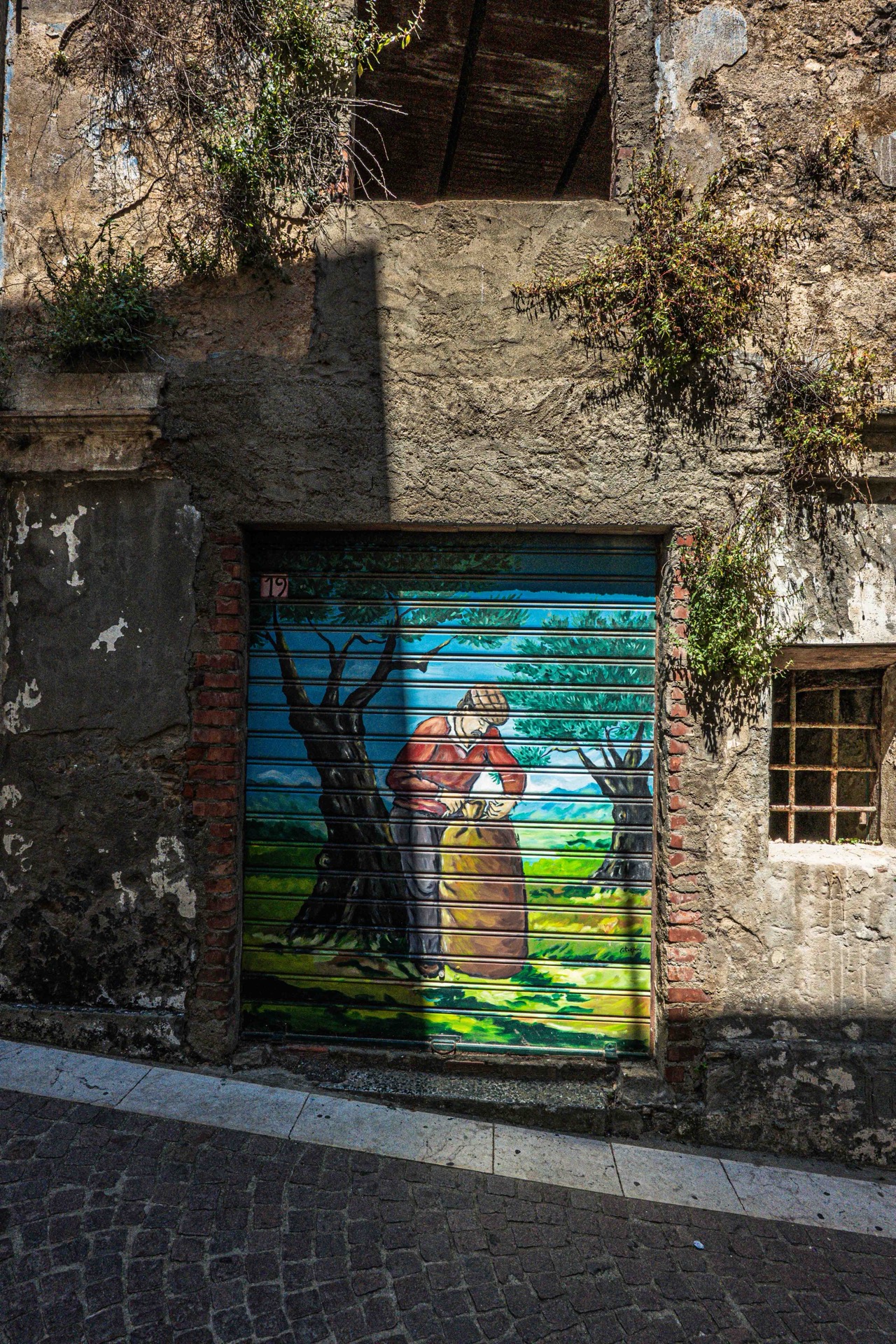
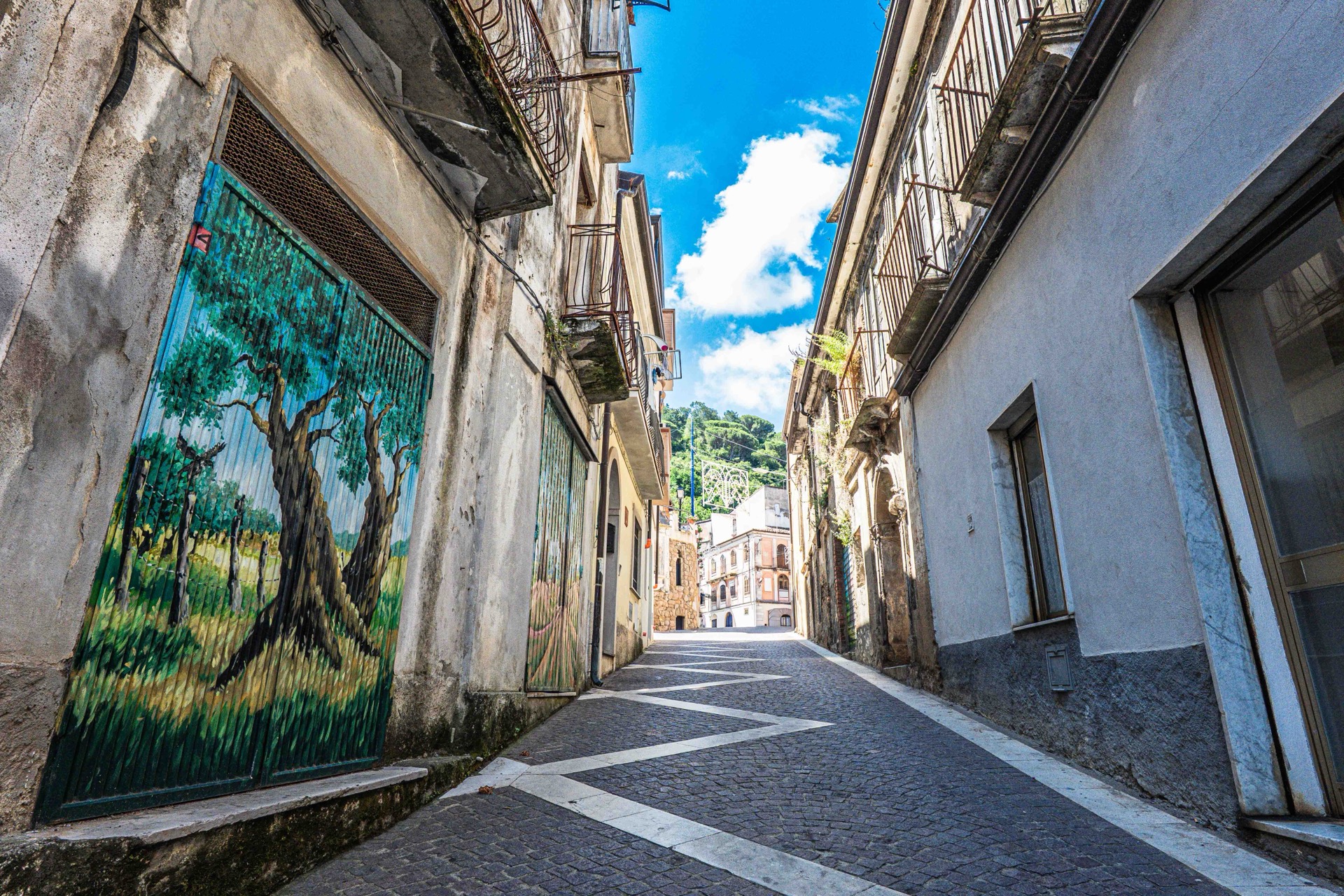
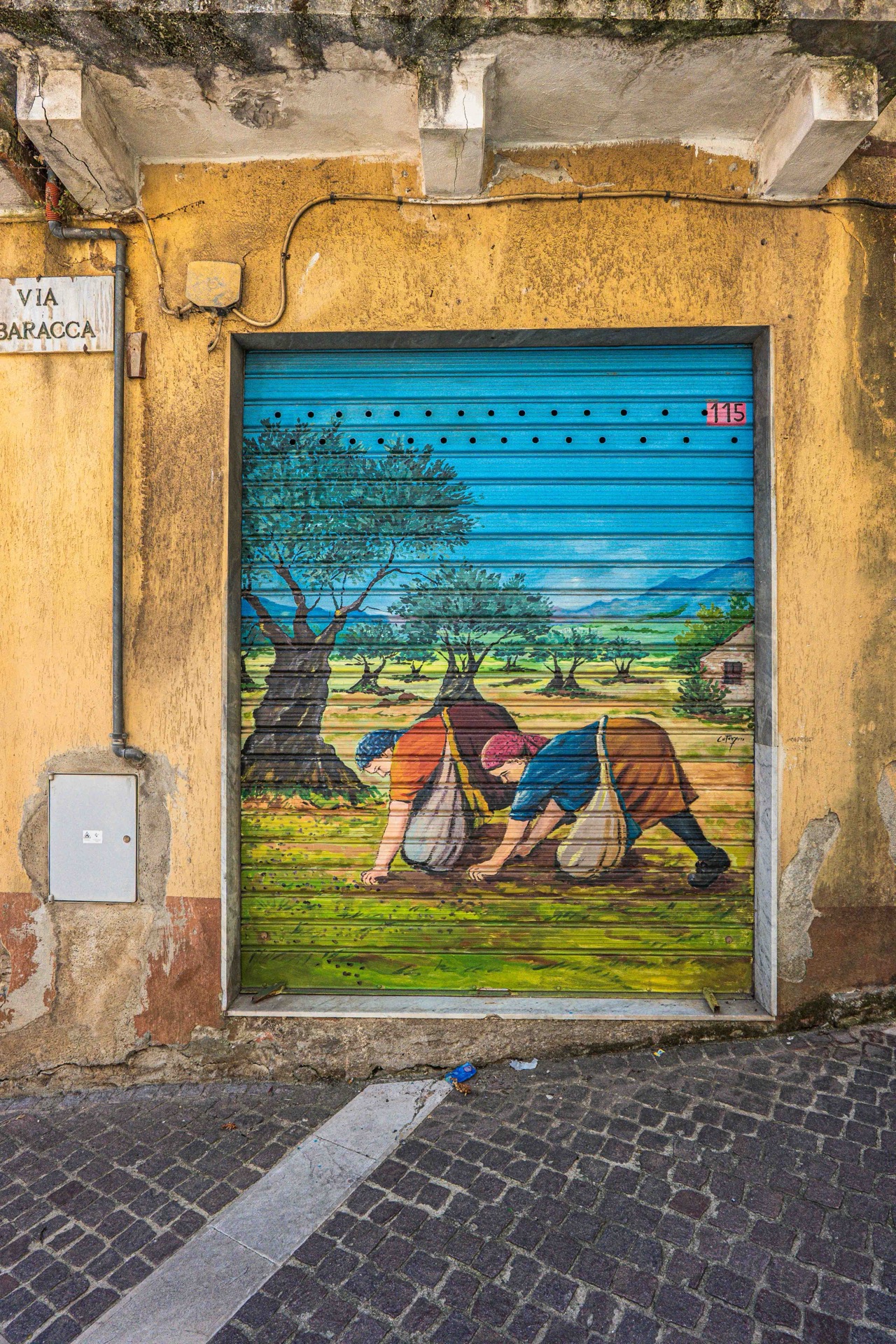
Attorno alla piazza del paese si dipana un fitto reticolo di vicoli stretti, le carrere, che scorrono tra i catogi, le case della tradizione contadina.
E poco più a valle, lungo il torrente Ugolio, un sistema di mulini e trappeti sostiene l’economia locale. Ancora oggi, la Via dei Mulini restituisce tracce di questo paesaggio che accompagna il corso dell’acqua. Non a caso, San Pietro a Maida è tra le Città dell’Olio, dove la varietà Carolea trova uno dei suoi territori più rappresentativi.
A impreziosire il tessuto urbano sono i grandi bassorilievi in terracotta degli scultori Francesco e Fortunato Violi, che raccontano momenti di vita del paese, rilievi scultorei incastonati in cornici di mattoni in cotto e disseminati nel borgo.
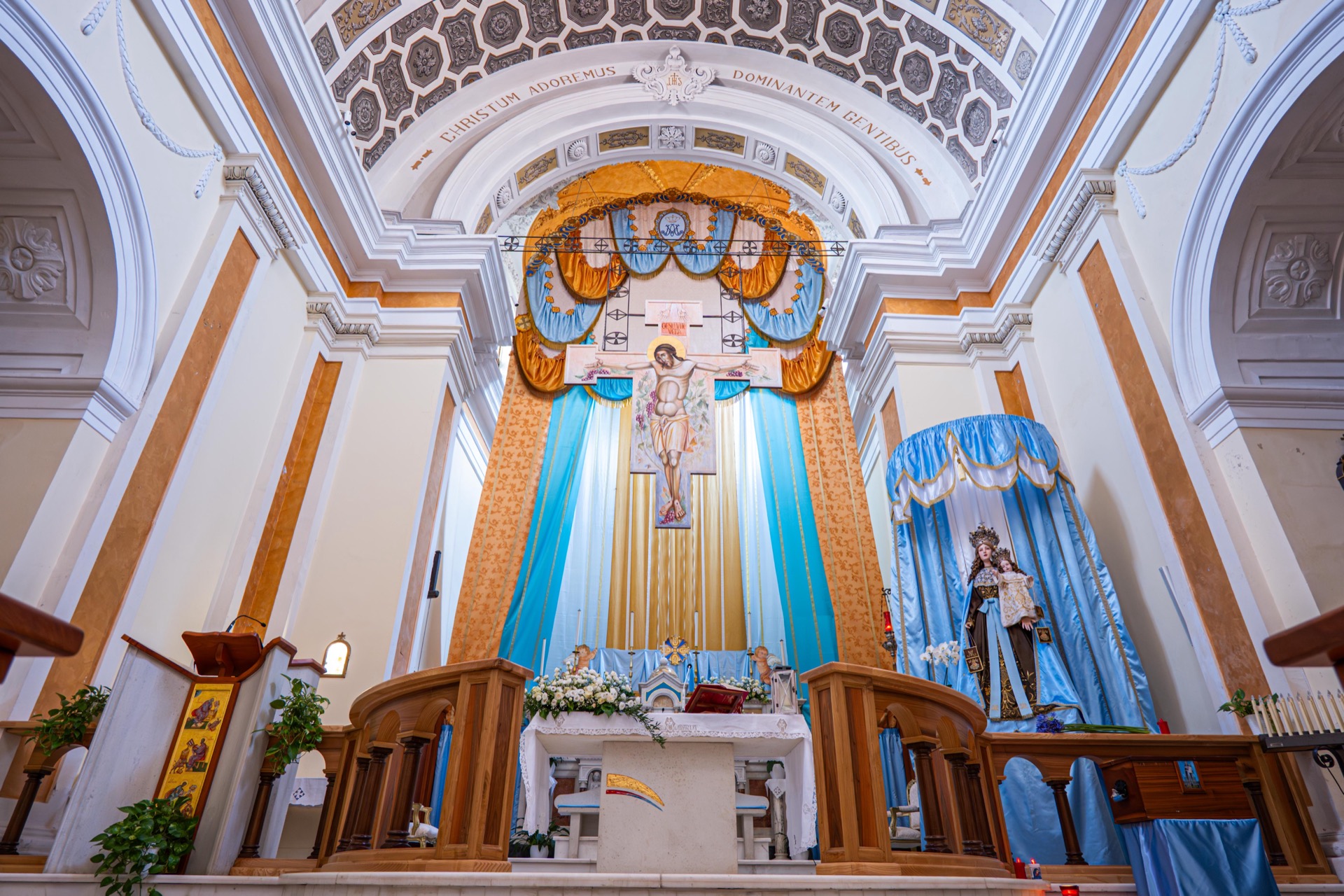
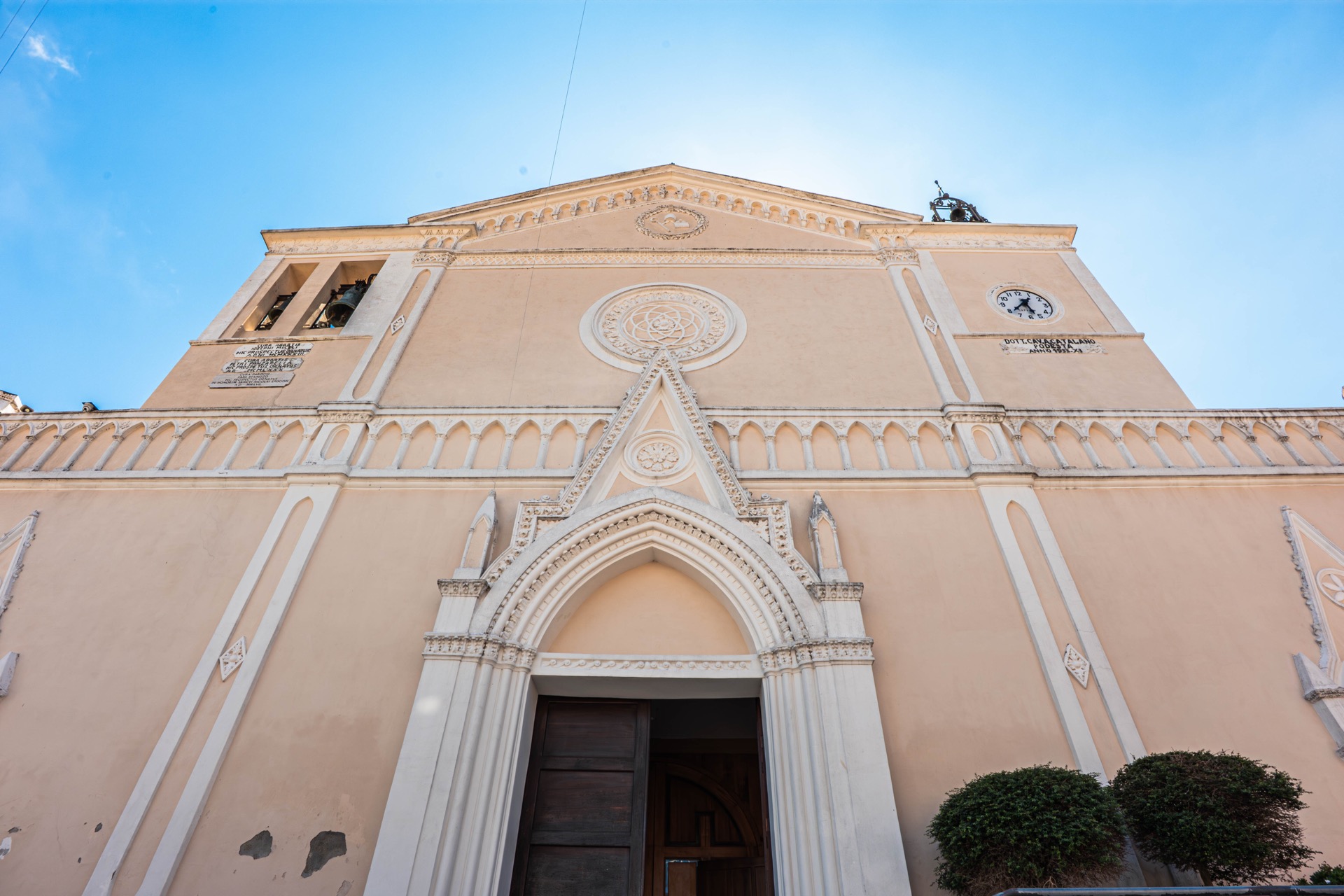
La Chiesa dedicata a San Nicola di Bari accompagna da secoli la vita spirituale della comunità. Edificata intorno al XV secolo sui resti dell’antica abbazia di San Pietro, conserva una facciata neogotica. All’interno, le tre navate sono scandite da arcate a tutto sesto che accompagnano lo sguardo fino all’altare maggiore, cuore della devozione al vescovo di Myra, ancora oggi profondamente radicata nella comunità.
Il percorso nella memoria religiosa prosegue con la Chiesa di San Giovanni Battista, una delle più importanti testimonianze storiche del paese. Risalente al XV secolo, presenta un’imponente facciata in stile barocco, arricchita da sculture e dettagli decorativi. Dopo anni di interventi di consolidamento e restauro, l’edificio è tornato ad accogliere i fedeli con la riapertura al culto, avvenuta nel luglio 2020. All’interno, la chiesa conserva altari finemente decorati e affreschi di pregio.
Poco fuori dall’abitato, l’Eremo di Santa Maria del Carmelo si distende in un angolo remoto, avvolto dal silenzio. La scalinata d’accesso e il portico ad arcate introducono a un interno essenziale, a navata unica, che risuona ancora di devozione per la Madonna del Carmelo.
Accanto, il Cimitero Monumentale si sviluppa su più livelli, tra cripte, affreschi e sepolture che attraversano i secoli.
San Pietro a Maida è un borgo che, attraversando i secoli, ha subito profondi cambiamenti. I devastanti terremoti del 1638, 1783 e 1905 ne hanno ridisegnato il volto, lasciando segni indelebili nella sua storia. Nel 1860 fu testimone di un episodio che ne ha segnato la memoria: Giuseppe Garibaldi vi fece tappa, durante la marcia verso il Volturno, segnando l’ingresso di San Pietro a Maida nella grande storia d’Italia.
Oggi è un angolo intatto di Calabria, un rifugio di autenticità, un luogo dove il tempo sembra scorrere più lentamente, ma con la stessa forza di sempre.
Ultima tappa da includere nell’itinerario, la mostra faunistica “La Favola Siamo Noi”, immersa nel verde del Pianoro di Corda, consente un incontro ravvicinato con il mondo animale che aggiunge al territorio una dimensione di scoperta e meraviglia.
Cimitero del Carmelo
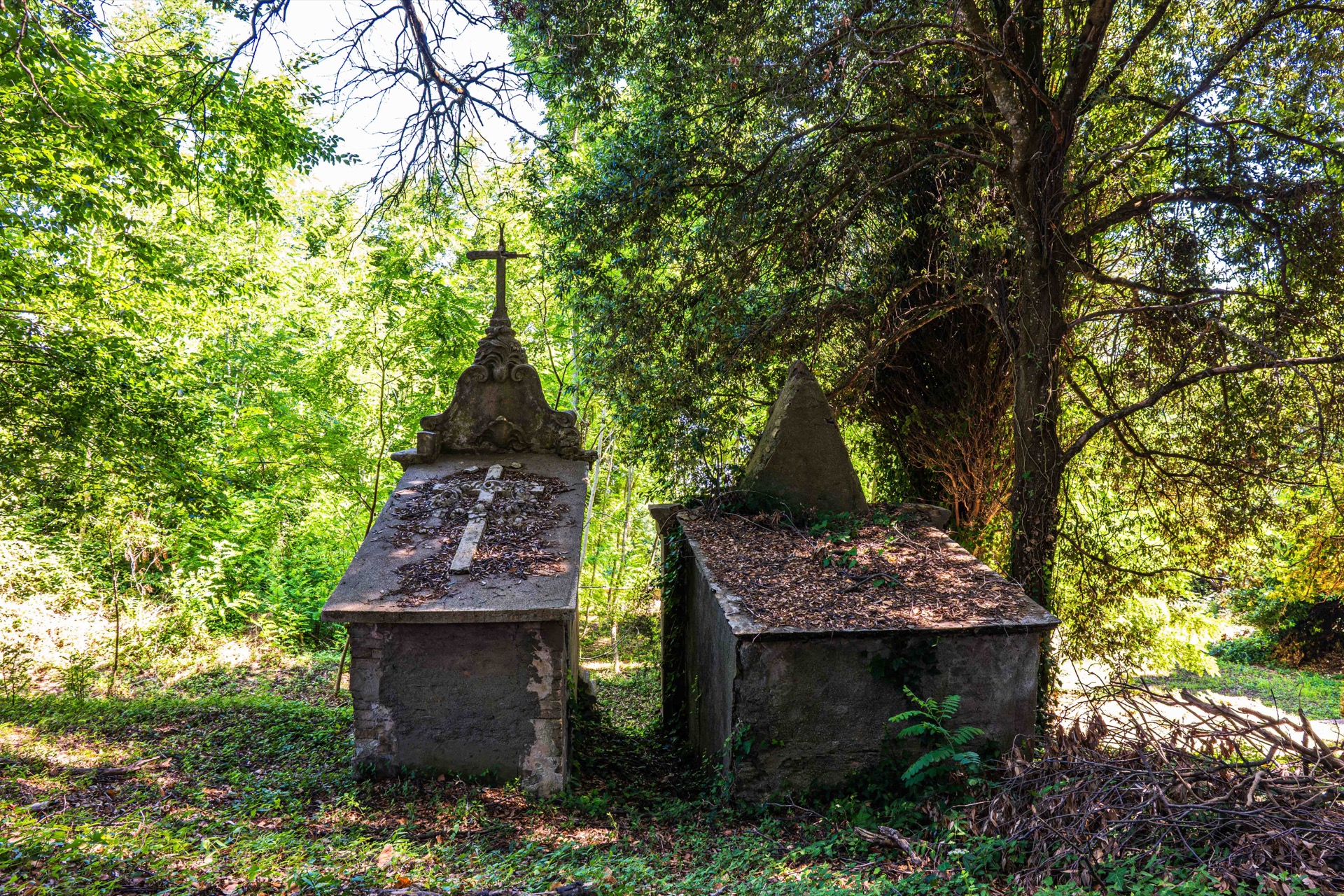
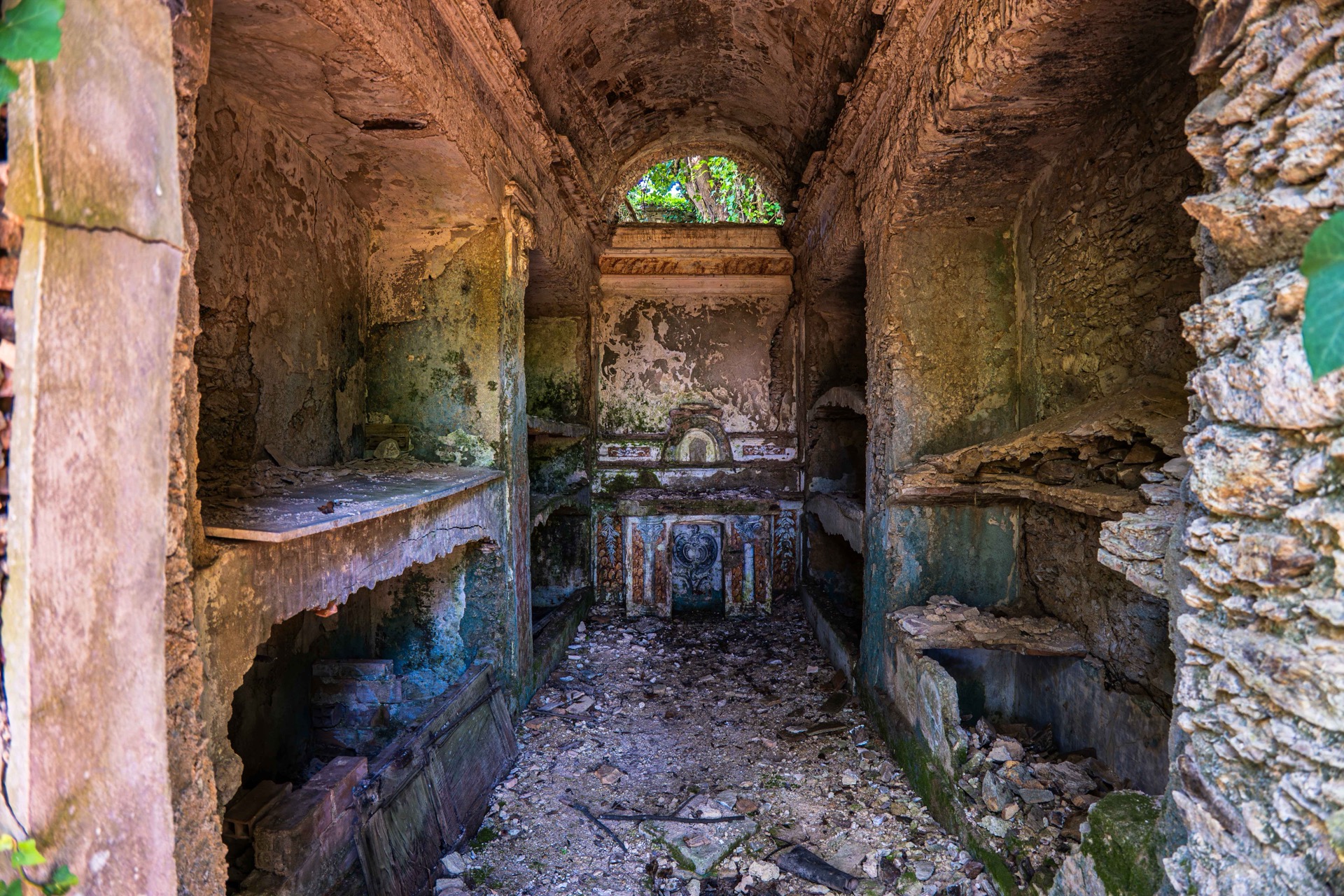
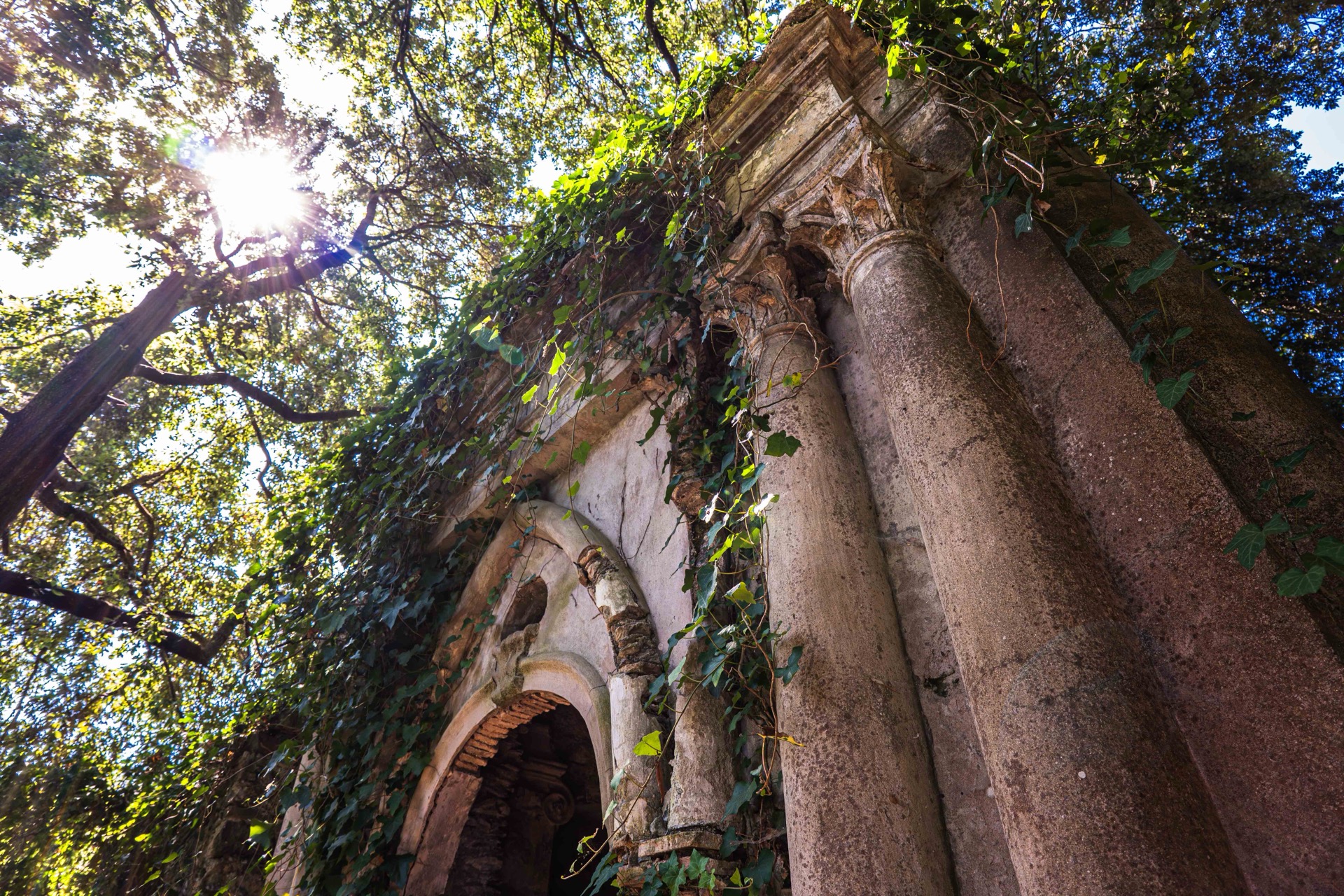
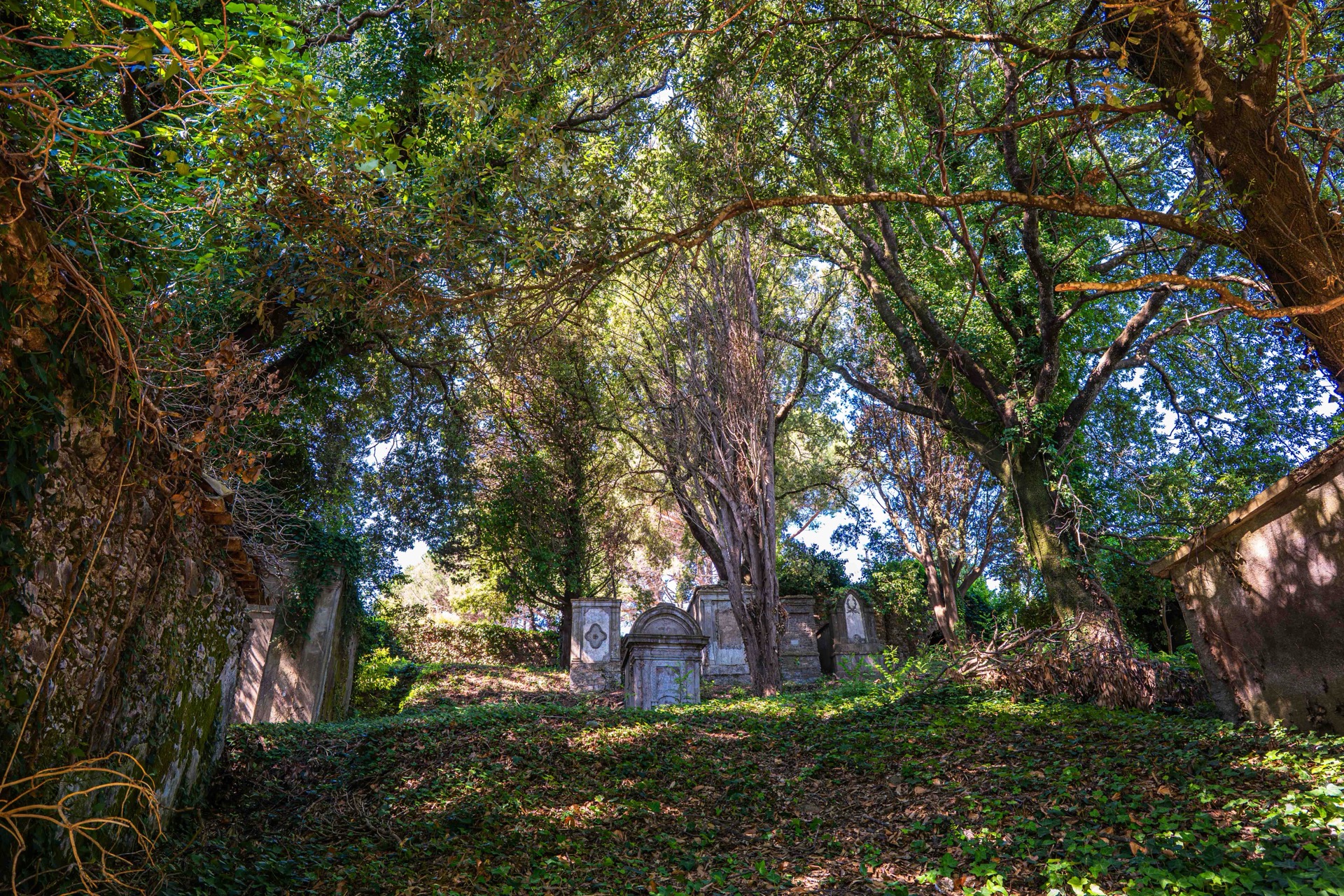
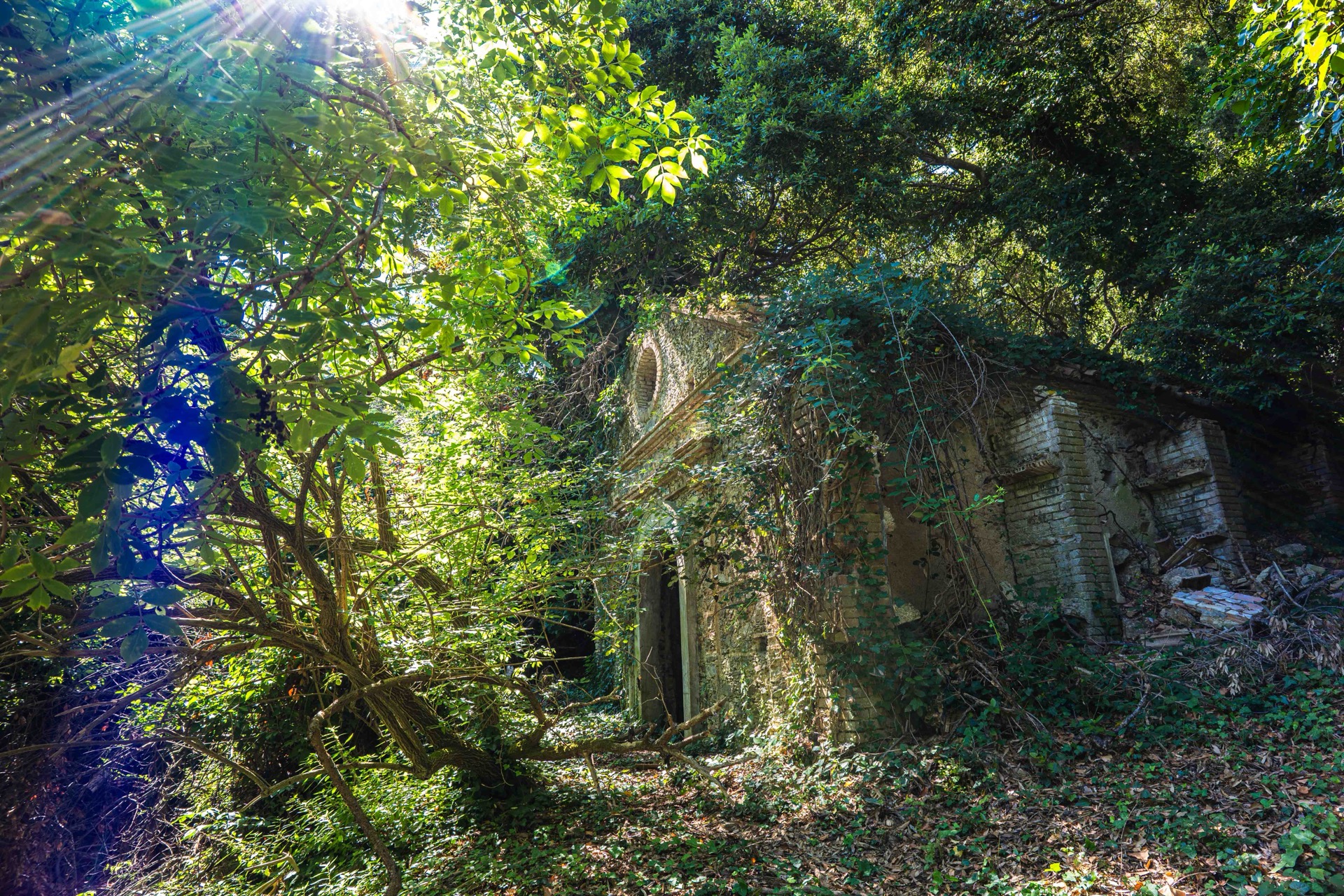
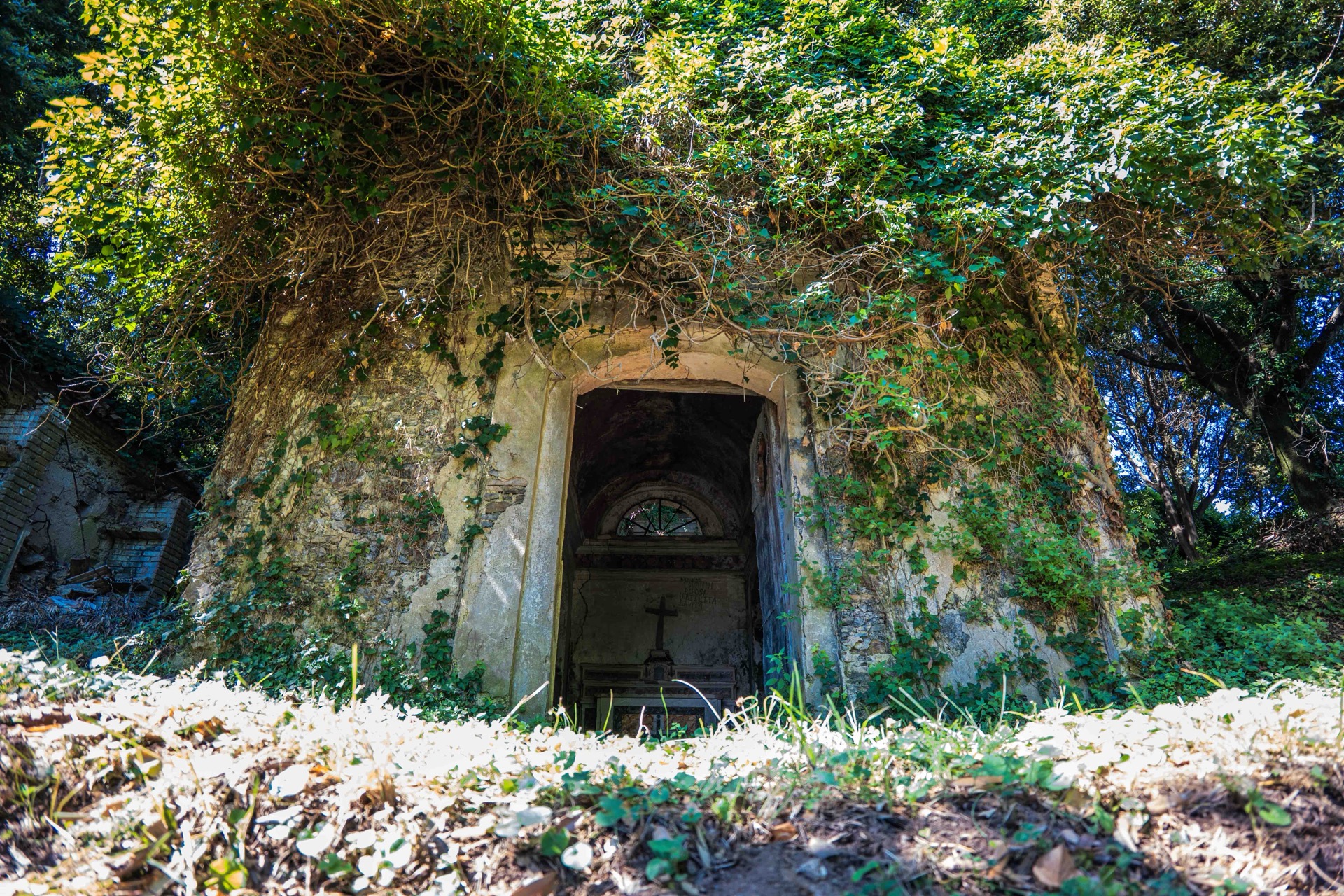
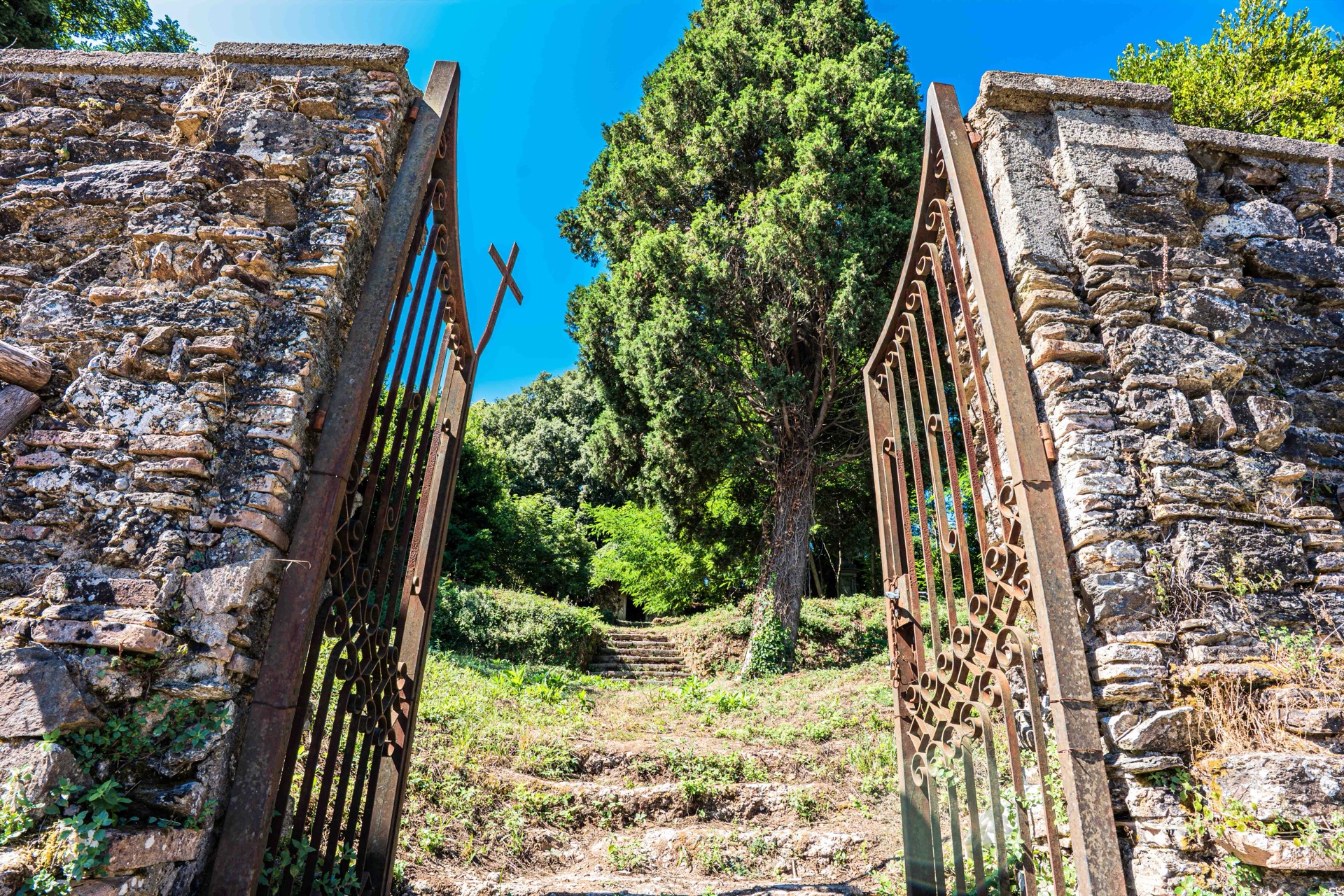
Il Cimitero del Carmelo è uno dei più antichi complessi funerari della Calabria, riconosciuto dalla Soprintendenza Archeologia, Belle Arti e Paesaggio come cimitero monumentale di eccezionale valore storico e architettonico. Le sue origini risalgono almeno al XIII secolo, con testimonianze di sepolture ancora precedenti, databili al XII secolo, che lo collocano tra i siti funerari storicamente più rilevanti dell’Italia meridionale.
Il complesso sorge in un luogo scelto dai monaci basiliani per la sua posizione protetta, lontano dalla costa e dalle vie di passaggio. Qui dove sobrietà, solitudine e preghiera erano al centro della loro intensa vita monastica. Ancora oggi questi luoghi sono avvolti dallo stesso silenzio che li separa dalle distrazioni del resto del mondo e conservano intatto quel senso di serenità che i monaci trovavano nell’ascesi e nella profonda connessione con il divino.
Il sito si sviluppa su tre gradoni, ciascuno con una funzione specifica e una propria stratificazione storica. Nel gradone più alto ci sono le cripte più antiche, quelle di maggiore pregio sotto il profilo storico e artistico, impreziosite da affreschi dipinti direttamente sull’intonaco.
È proprio in questa parte del complesso che si registra oggi la maggiore vulnerabilità, ed è qui che, di recente, si è verificato il parziale crollo di una delle cappelle storiche.
Nella parte del gradone centrale si trova invece la cappella cimiteriale, con un altare e i resti delle panche laterali. A questo livello si accede attraverso una scalinata a gradoni larghi in pietra locale, la stessa utilizzata per il chiostro dell’Eremo del Carmelo, che conduce al cancello d’ingresso in ferro battuto, probabilmente di fattura ottocentesca. Il gradone intermedio accoglie cripte e tombe singole, in gran parte risalenti al XV secolo, caratterizzate da elementi architettonici e simbolici di grande interesse.
Nel gradone più basso si trovano infine sepolture sotterranee, alcune delle quali con segni evidenti di profanazione avvenute nel tempo. Dentro e intorno al complesso monumentale, straordinarie querce secolari arricchiscono il valore del sito.
Il Cimitero del Carmelo è uno degli ultimi esempi di cimitero completamente monumentale, rimasto immutato nel tempo. La conservazione ne ha preservato l’autenticità, rendendolo un patrimonio di inestimabile valore.
Informazioni pratiche
- Momento ideale: sempre, nelle ore diurne. Il silenzio del luogo e la luce che filtra tra i rami delle querce secolari rendono l’atmosfera davvero particolare.
- Accessibilità: si tratta di un complesso antico che presenta barriere architettoniche.
- Cultura locale: San Pietro a Maida è la Città dell’Olio dove la varietà Carolea produce uno degli oli più pregiati d’Italia. Il borgo racconta la sua identità contadina nei “catogi”, le antiche case basse a piano unico, e nelle “carrere”, i vicoli che li collegano, oltre che nel Muro della Memoria con i pannelli in terracotta refrattaria che celebrano il lavoro manuale.
- Itinerario consigliato: Visita l’Eremo del Carmelo, che sorge a pochi passi dal cimitero. Si racconta che fu la Madonna a fermare il terremoto, impedendo alla montagna di seppellire le case del paese. Prosegui verso il centro storico e la Chiesa di San Nicola di Bari. San Pietro a Maida è in posizione baricentrica e consente di spostarti sia verso la costa tirrenica, con Pizzo Calabro come prima meta, sia verso quella ionica passando per Squillace e raggiungendo Stalettì e Soverato.
Chiesa San Nicola di Bari
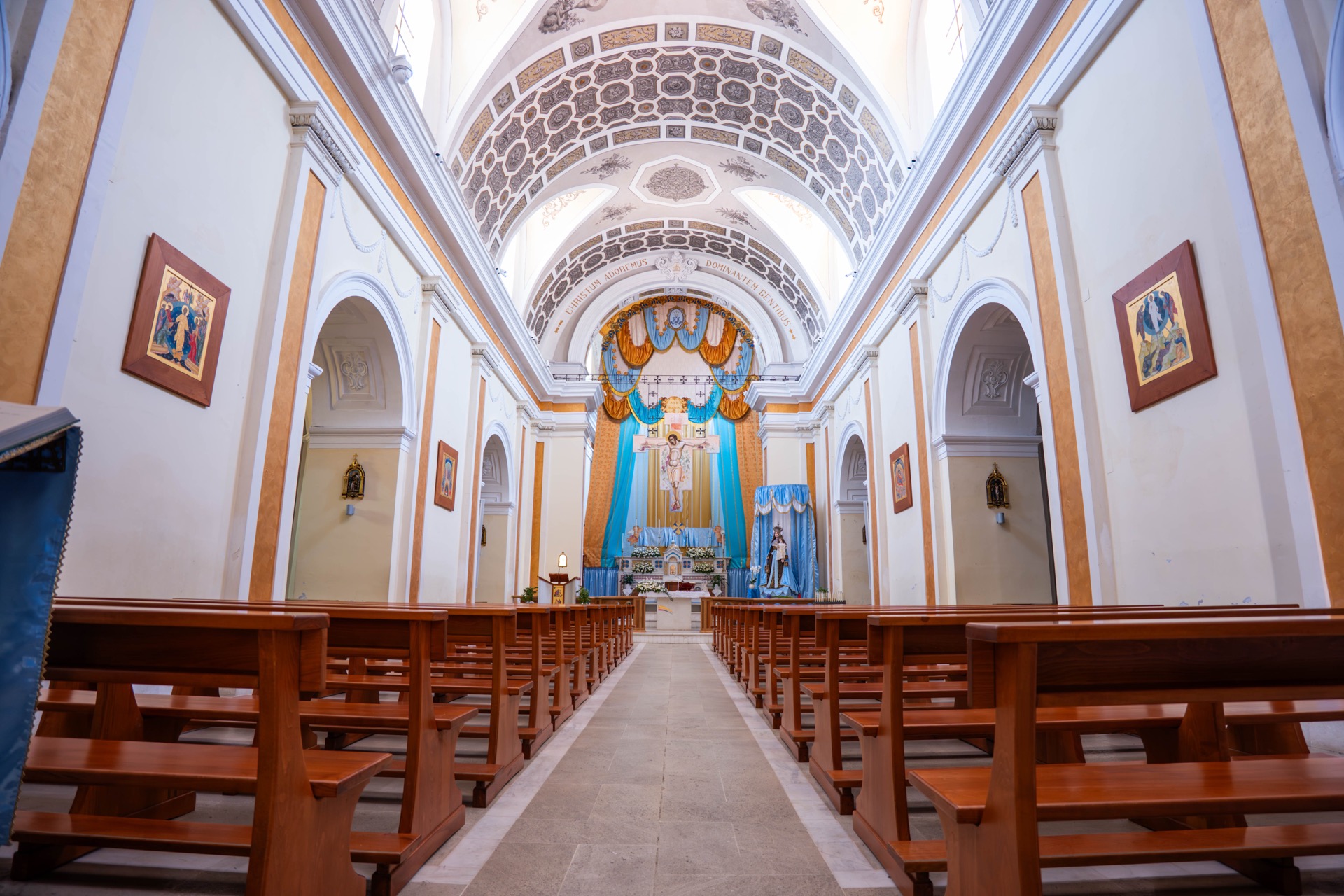
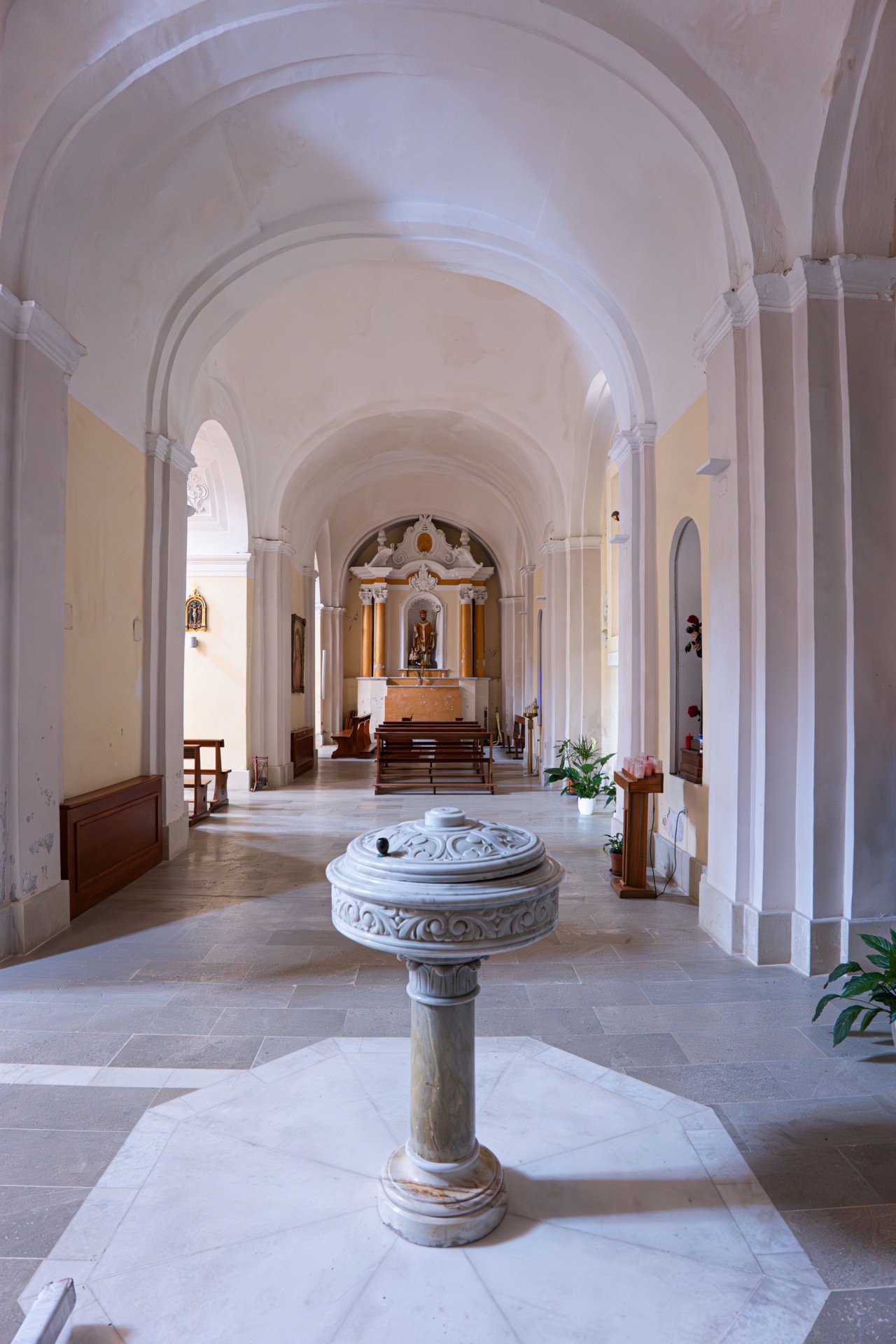
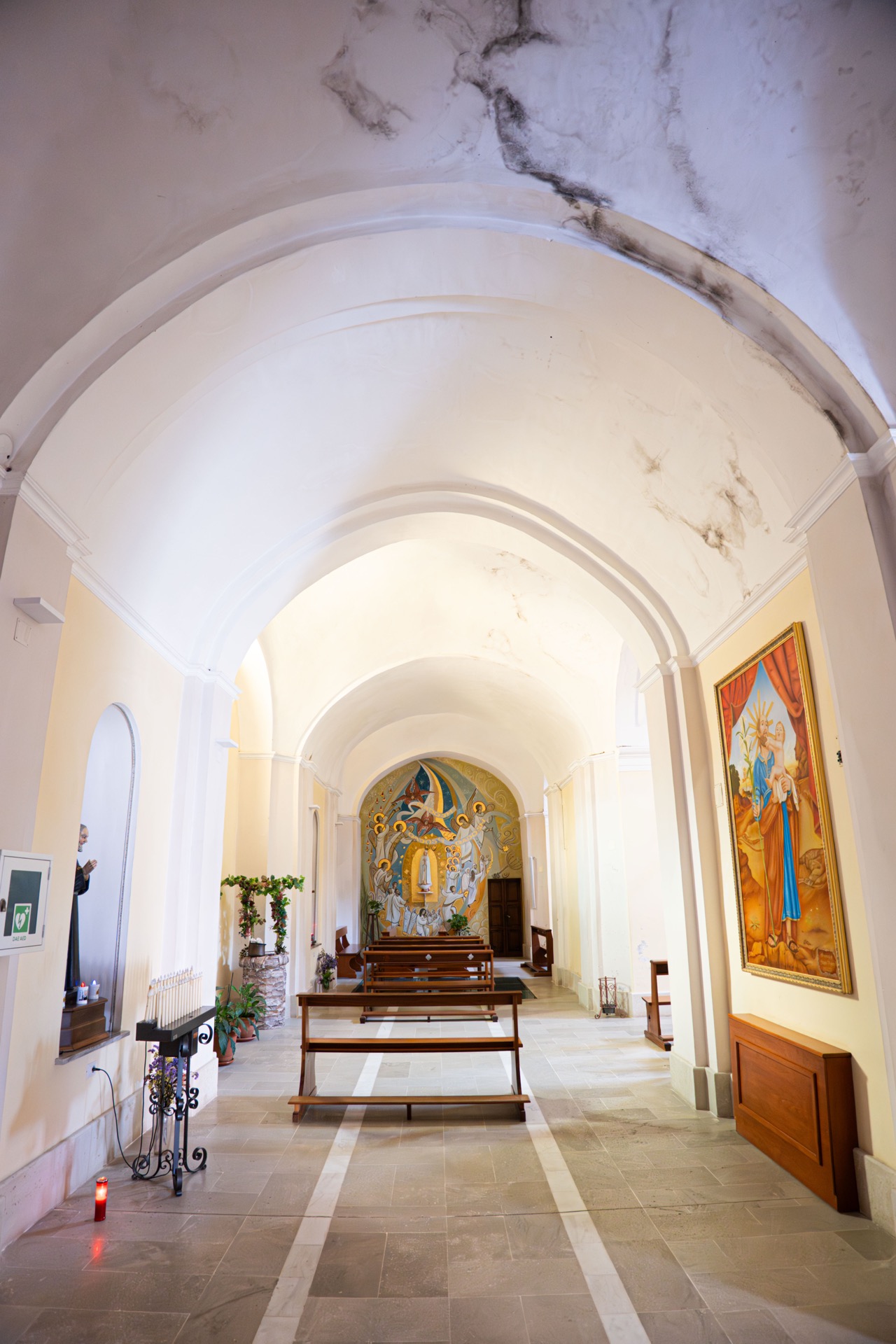
La Chiesa di San Nicola di Bari accompagna da secoli la storia di San Pietro a Maida.
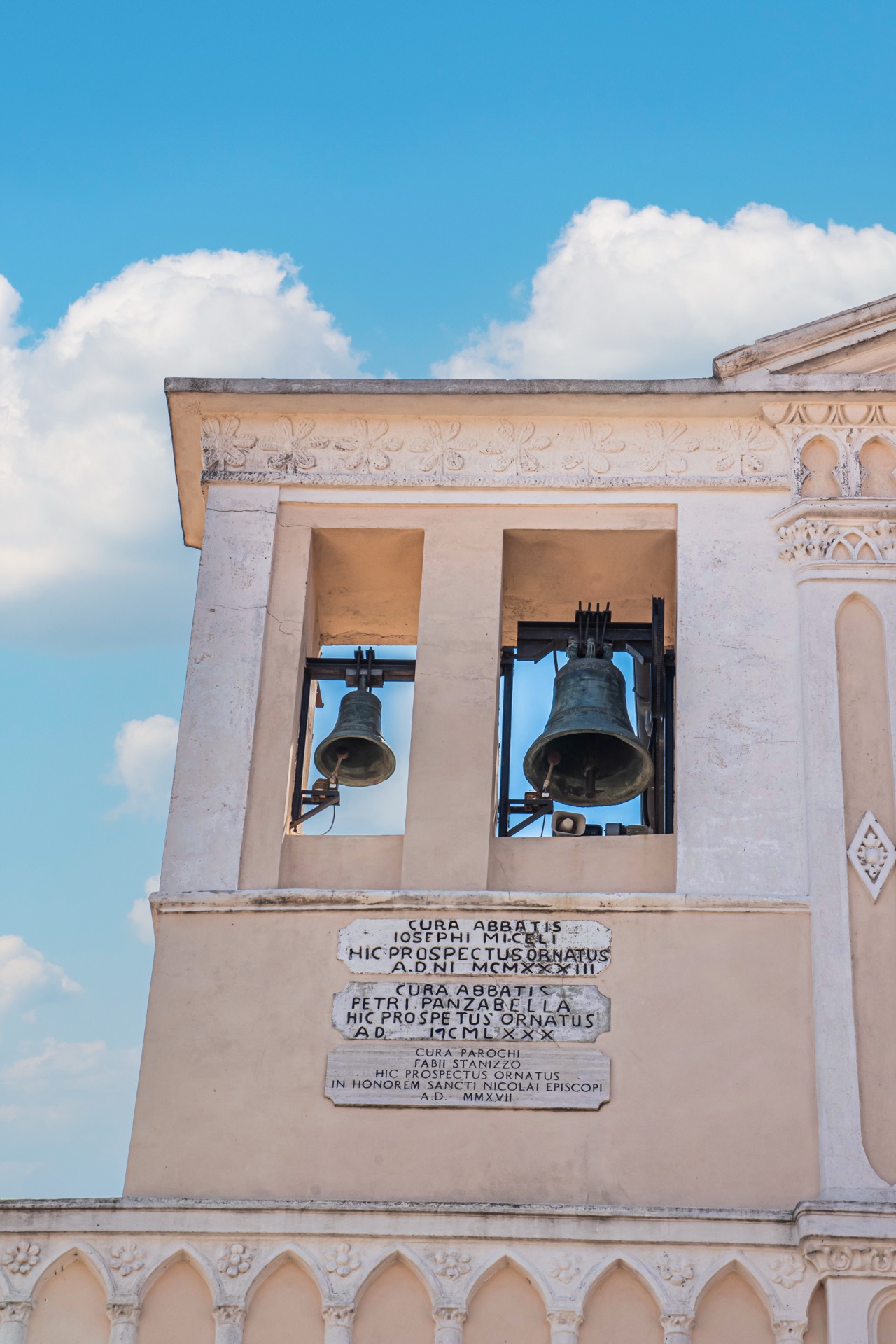
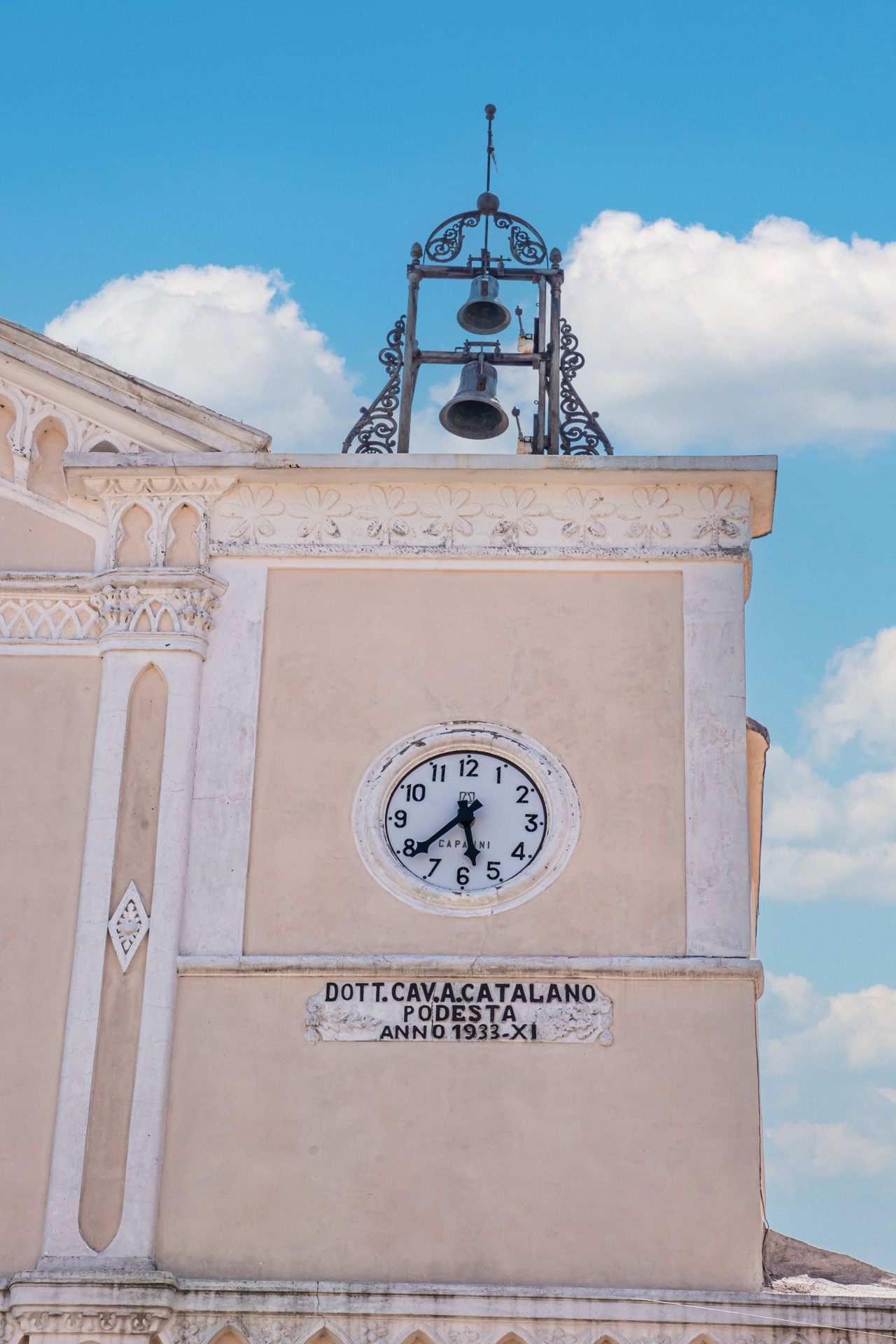
Costruita intorno al 1400 sui resti dell’antica abbazia di San Pietro, la chiesa riflette una lunga stratificazione di interventi, oggi leggibile nella facciata rifatta nel 1931 e di gusto neogotico. A colpire è il prospetto principale della chiesa, scandito dai tre portali a sesto acuto finemente lavorati, con il centrale sormontato da un rosone a motivi floreali. Sui lati della facciata in alto sono stati incastonati a seguito del rifacimento della stessa l’orologio con le campane minori sul lato destro e il sistema delle campane maggiori sul lato sinistro, che attraggono lo sguardo verso l’alto rafforzandone la presenza nel paesaggio urbano.
All’interno, lo spazio conserva un’impostazione romanica. Le tre navate sono separate da arcate a tutto sesto che creano un ritmo regolare e continuo fino al presbiterio. Qui l’altare maggiore completamente ricostruito nel 1958 in marmo, diventa il centro dello spazio liturgico. Sul lato destro invece si trova l’altare minore (di chiara matrice mariana) completamente decorato con stucchi dorati a seguito dei lavori di restauro recenti e, dove in alto è posta la statua di San Nicola di Bari raffigurato con i tre fanciulli resuscitati, uno dei temi più noti della tradizione iconografica del vescovo di Myra.
L’archivio della chiesa conserva i registri dei sacramenti a partire dal 1612, una sequenza documentaria che attraversa i secoli e restituisce, senza interruzioni, la continuità della vita religiosa della comunità.
Informazioni pratiche
- Momento ideale: sempre, e in occasione della festa del Santo il 6 dicembre, quando la chiesa si veste a festa.
- Accessibilità: la chiesa è situata nel centro storico ed è facilmente raggiungibile a piedi dalla piazza principale. Accessibile.
- Cultura locale: San Pietro a Maida è la Città dell’Olio, dove la varietà Carolea produce uno degli oli più pregiati d’Italia. Il borgo racconta la sua identità contadina attraverso i catogi, le antiche case basse a piano unico, e le carrere, i vicoli del centro, oltre che nel Muro della Memoria con i pannelli in terracotta che celebrano il lavoro manuale.
- Itinerario consigliato: dopo aver visitato la Matrice, perditi tra le “carrere” del centro per ammirare le porte dipinte e il Muro della Memoria. Poco fuori l’abitato visita l’Eremo del Carmelo e il Cimitero Monumentale, oppure segui il suono dell’acqua lungo il torrente Ugolio per scoprire gli antichi mulini e i trappeti immersi tra l’argento degli ulivi.
L’Eremo di Santa Maria del Carmelo
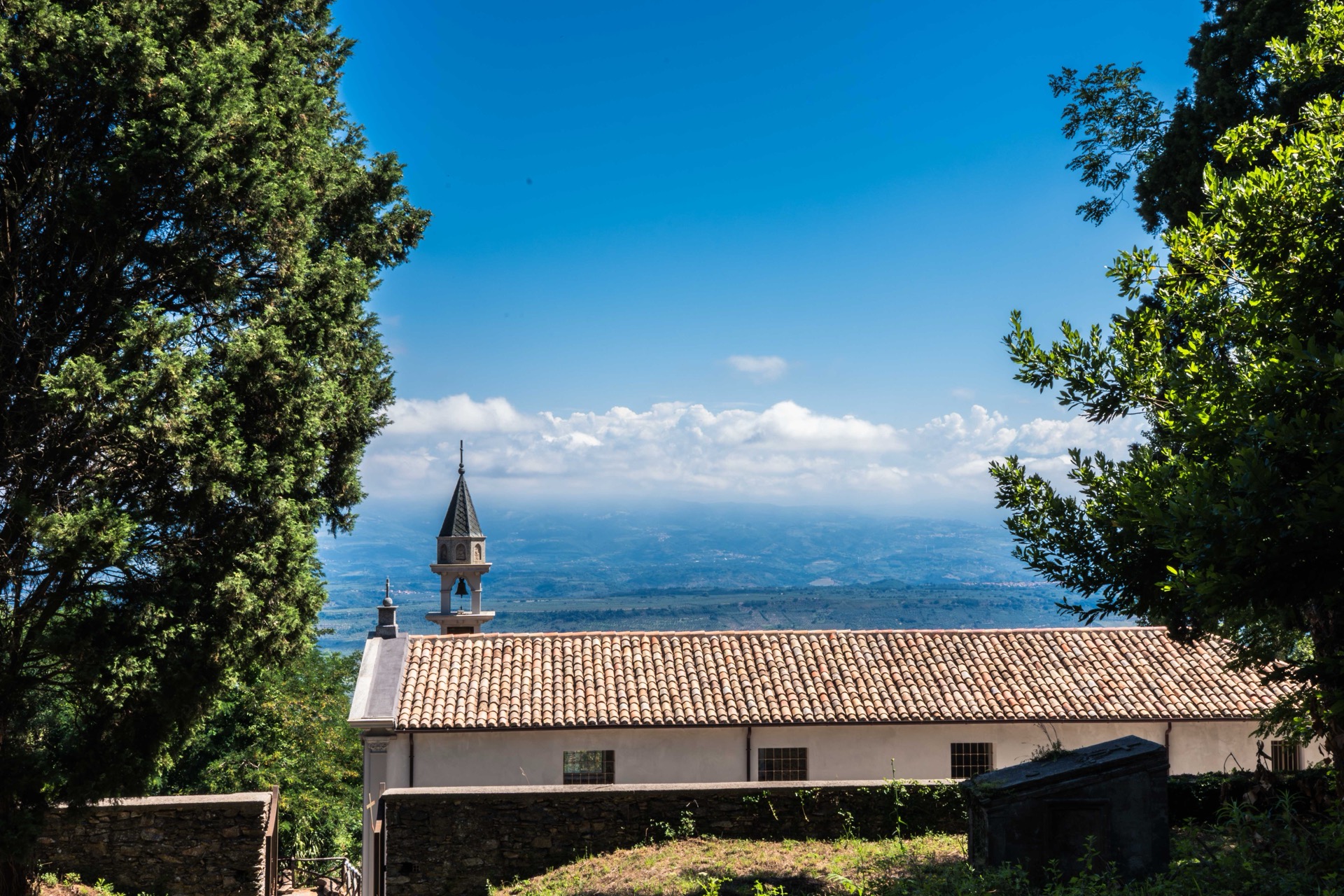
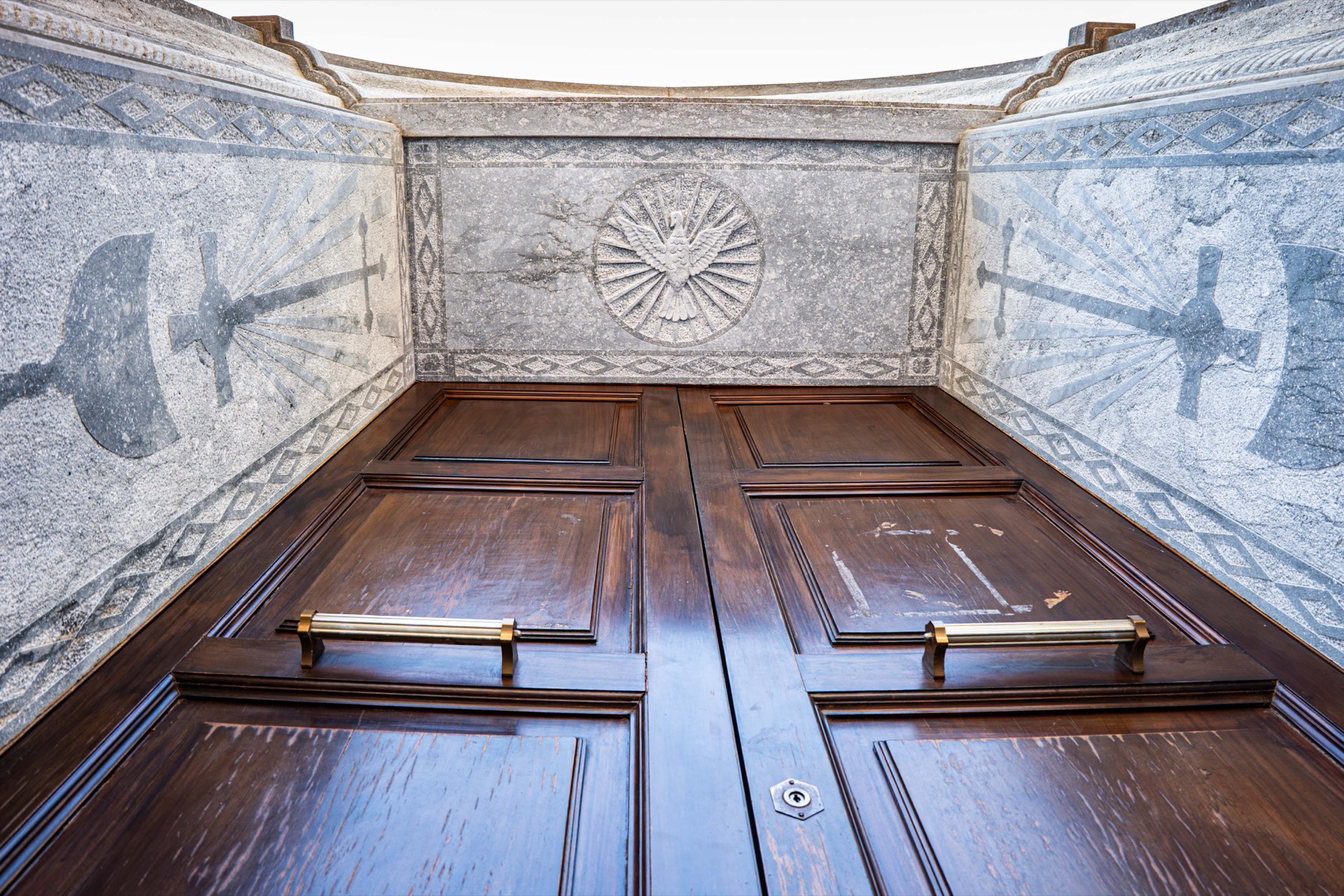
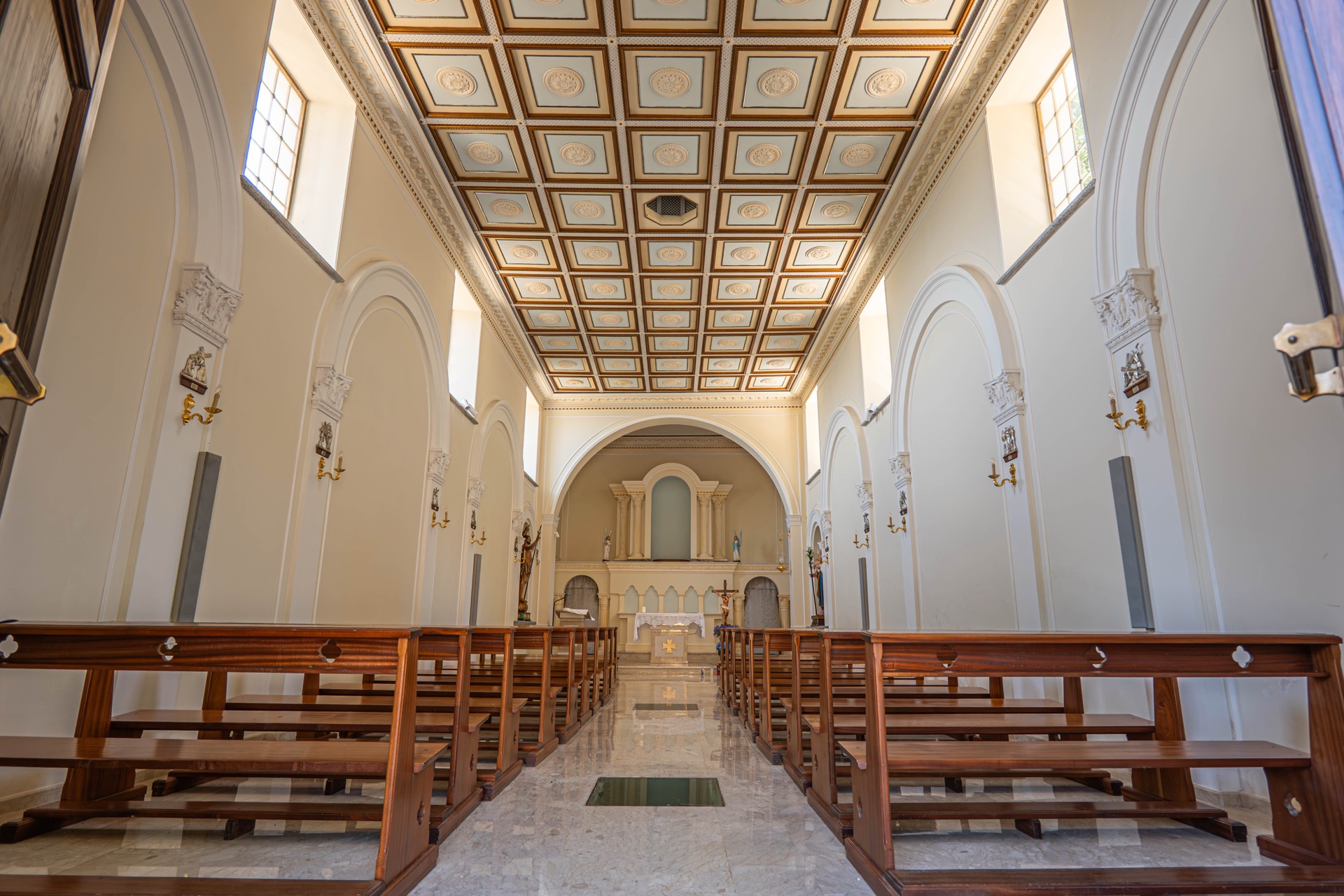
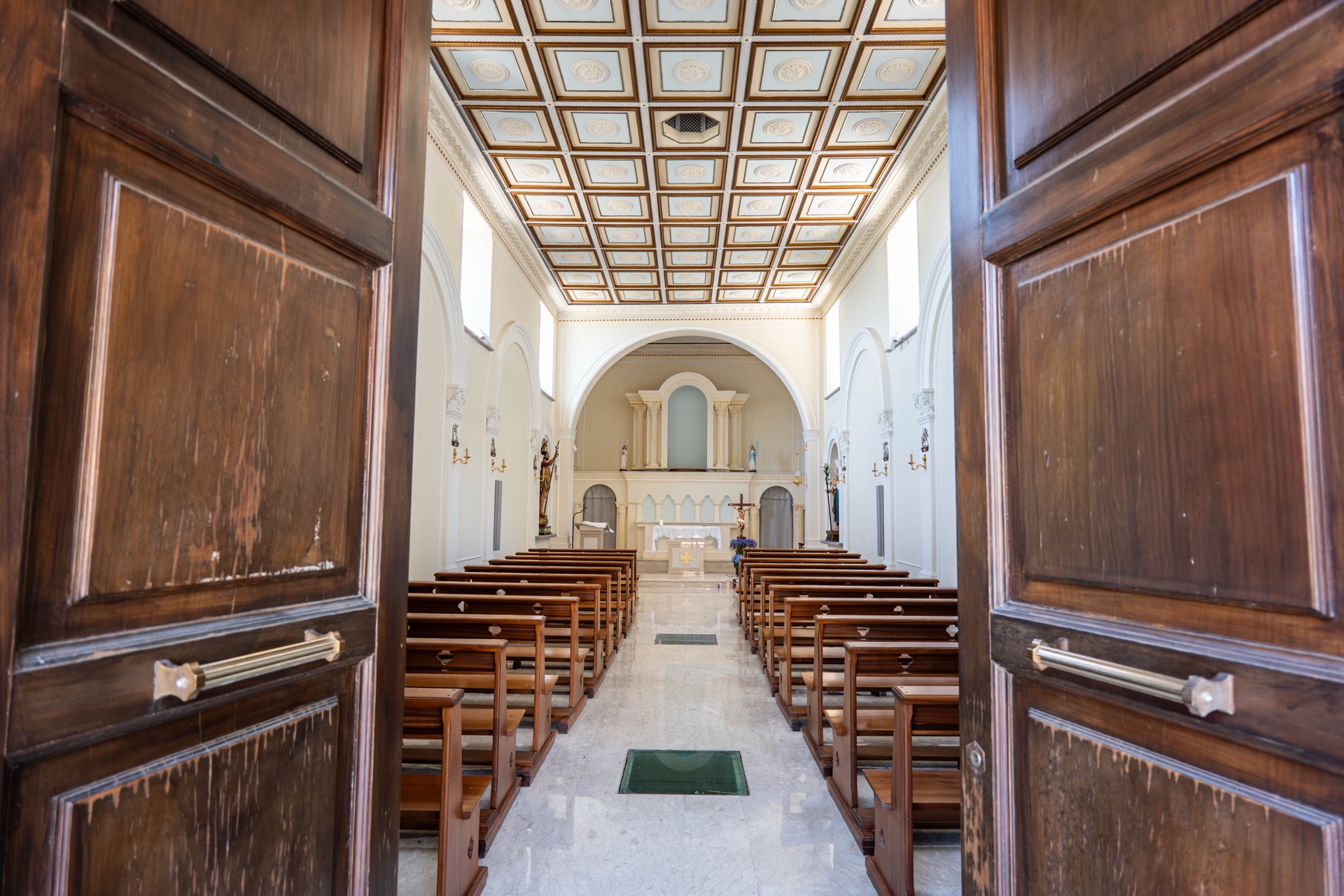
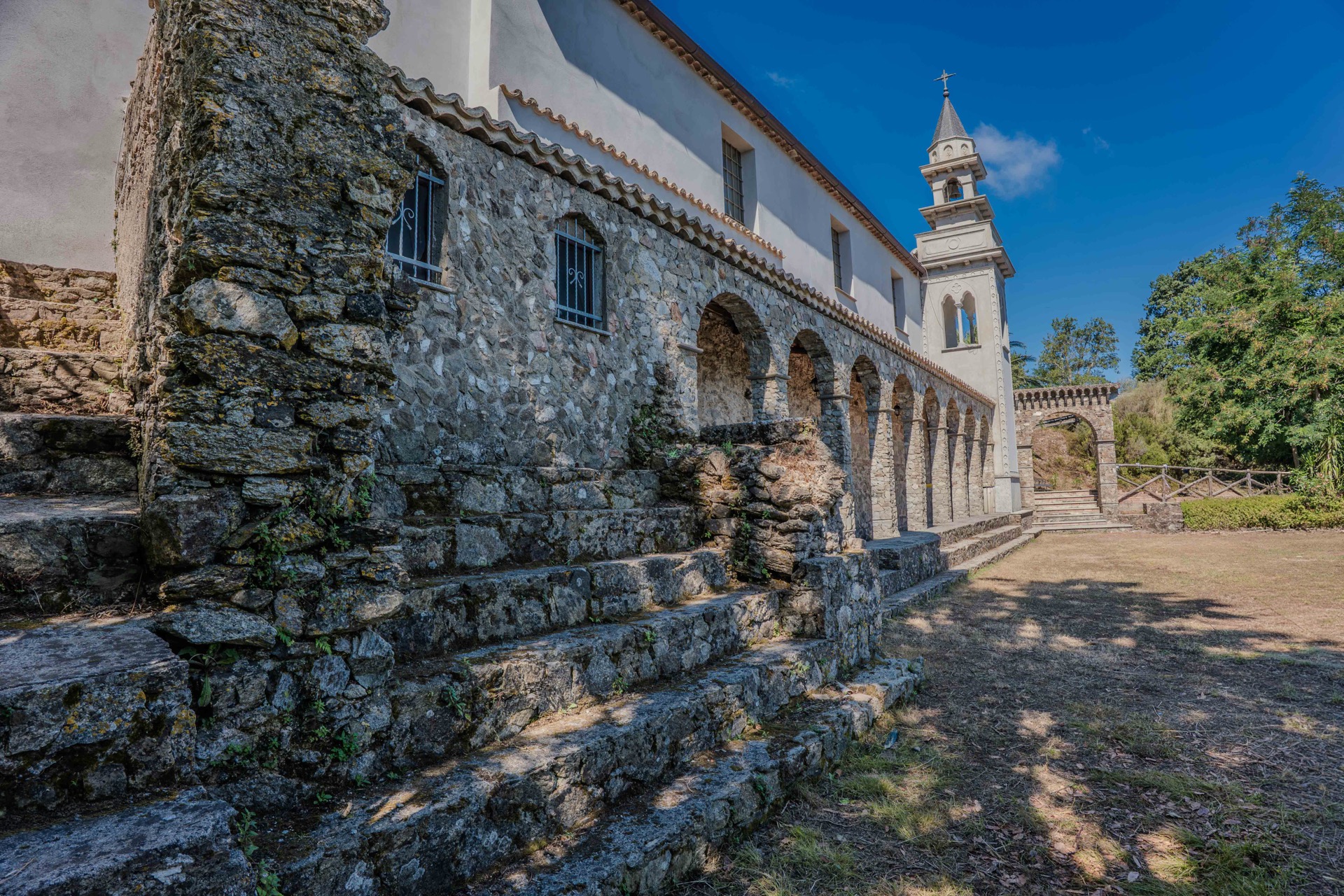
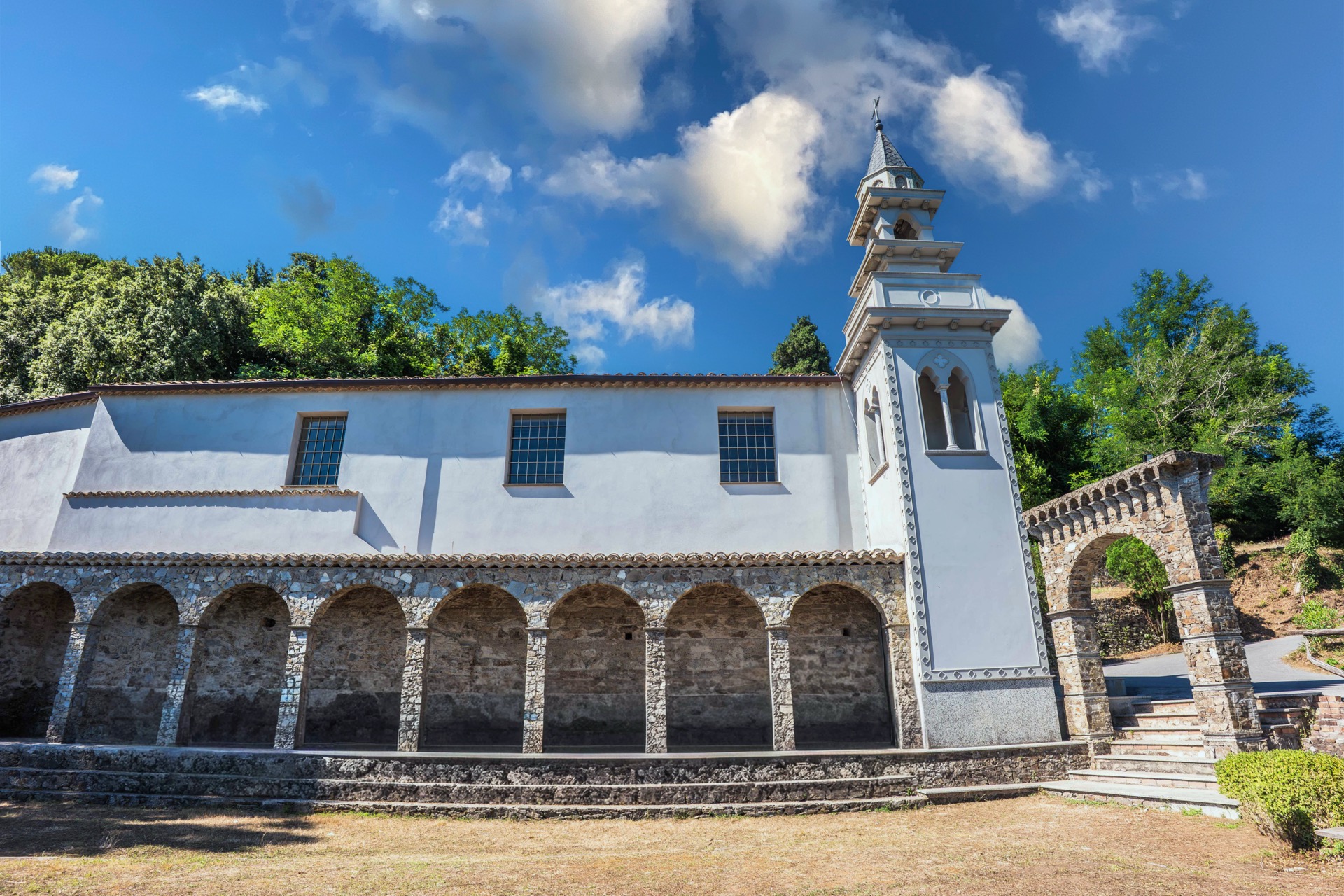
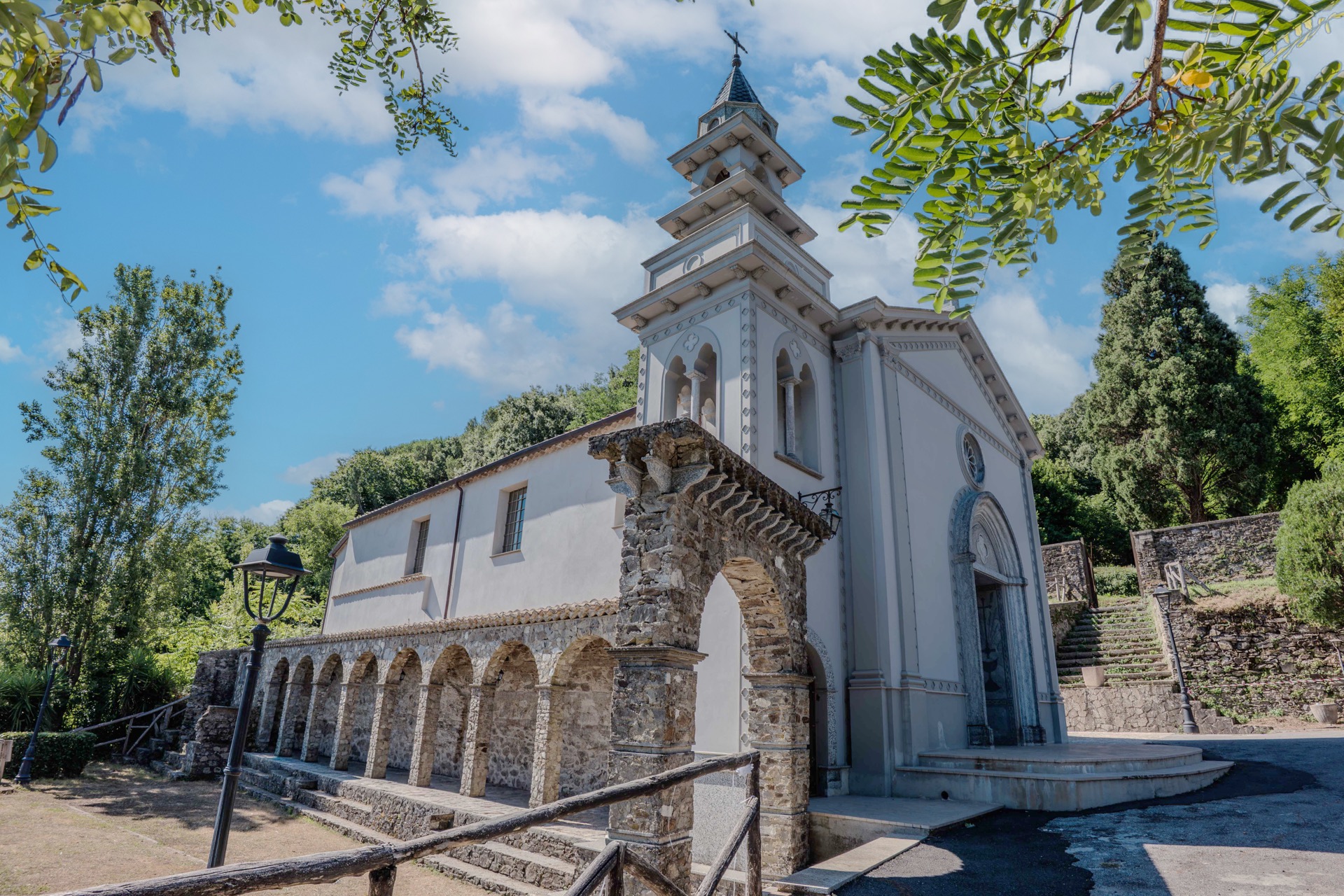
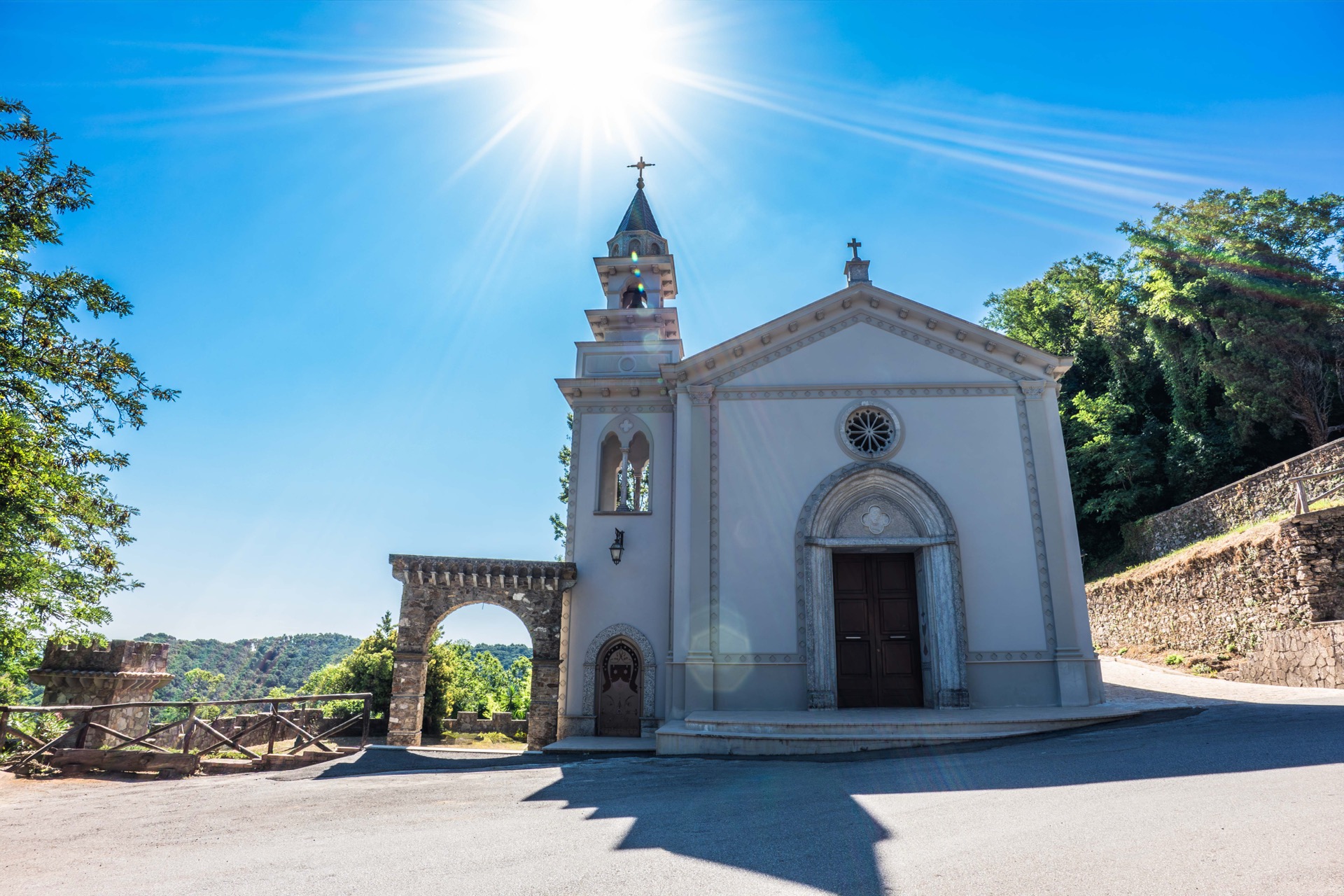
Adagiato sulle colline che guardano il Golfo di Sant’Eufemia, l’Eremo di Santa Maria del Carmelo a San Pietro a Maida è un complesso che affascina per la sua posizione e per il legame ancora vivo con la comunità. Un luogo di confine, sospeso tra dimensione religiosa e paesaggio, che resta nella memoria di chi lo attraversa.
Le origini risalgono al XVI secolo, ma il sito è di più antica frequentazione, dove sicuramente vi era già una devozione mariana ma non carmelitana, probabilmente legata alla presenza di monaci basiliani.
Nel tempo l’eremo ha subito interventi e ricostruzioni, anche in seguito ai terremoti che hanno interessato la Calabria, assumendo un impianto architettonico sobrio, essenziale, privo di eccessi decorativi ma ricco di suggestione.
La facciata è scandita dal portale in pietra e dal rosone centrale, mentre il campanile si innalza come un segno discreto nel paesaggio, rendendo il complesso riconoscibile già da lontano.
Sul lato sinistro si sviluppa un portico ad arcate che rimanda all’originaria funzione di accoglienza e sosta dei pellegrini.
La facciata, il campanile ed il portico sono in realtà di recente ricostruzione avvenuta alla fine degli ’80 del secolo scorso con l’impiego di maestranze locali.
Sul fronte, il sagrato e la scalinata accompagnano l’ingresso con un andamento quasi rituale, aprendo a una dimensione raccolta e inaspettata.
L’interno (ricostruito nei lavori di fine anni ’80), a navata unica, è scandito da un soffitto a cassettoni decorati realizzato da maestranze locali, che conferisce ordine e profondità.
Ma l’attenzione si concentra sull’altare maggiore, dove è custodita l’immagine venerata della Madonna del Carmelo. Nelle nicchie laterali si collocano le statue di San Giuseppe e di Gesù Risorto, che completano l’impianto iconografico.
La devozione alla Madonna del Carmelo, ancora oggi profondamente radicata, si alimenta anche di racconti e tradizioni popolari che attribuiscono alla sua intercessione episodi di protezione collettiva.
All’esterno, accanto all’eremo, si trova l’antico cimitero monumentale, con origini medievali e in uso fino agli anni ’50. Le sepolture arricchiscono il complesso dal punto di vista storico e ne conservano la memoria collettiva.
Informazioni pratiche
- Momento ideale: sempre. È un luogo di silenzio che permette di godere appieno della spiritualità del luogo e del panorama.
- Accessibilità: situato poco distante dal centro, ha un ampio spazio antistante e l’accesso alla chiesa non presenta particolari barriere architettoniche.
- Cultura locale: la devozione alla Madonna del Carmelo è legata alla memoria dei terremoti. Si racconta che fu proprio la Vergine a fermare la montagna impedendo che seppellisse le case del paese, un miracolo che vive ancora oggi nei racconti della comunità. San Pietro a Maida è la Città dell’Olio dove la varietà Carolea produce uno degli oli più pregiati d’Italia. Il borgo racconta la sua identità contadina attraverso i catogi, le antiche case basse a piano unico, e le carrere, i vicoli del centro, oltre che nel Muro della Memoria con i pannelli in terracotta che celebrano il lavoro manuale.
- Itinerario consigliato: prosegui verso l’antico Cimitero Monumentale, una piccola perla di architettura e tra i più antichi complessi documentati in Calabria. Da qui scendi poi verso il centro storico per visitare la Chiesa di San Nicola di Bari, i vicoli con le porte dipinte e il Muro della Memoria. Nella bella stagione approfitta per fare una bella escursione a valle lungo la via degli antichi mulini e dei trappeti.
Chiesa di San Giovanni Battista
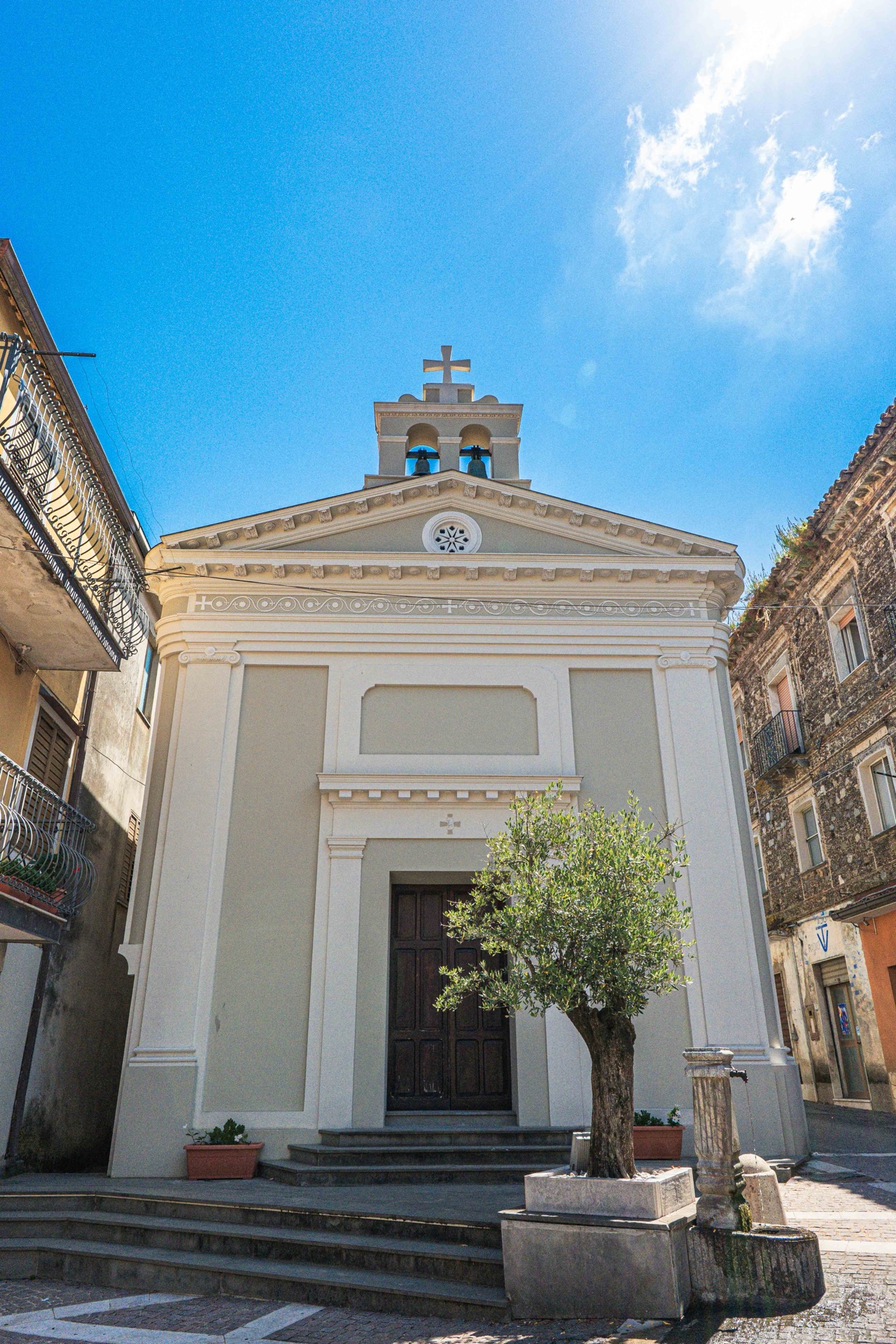
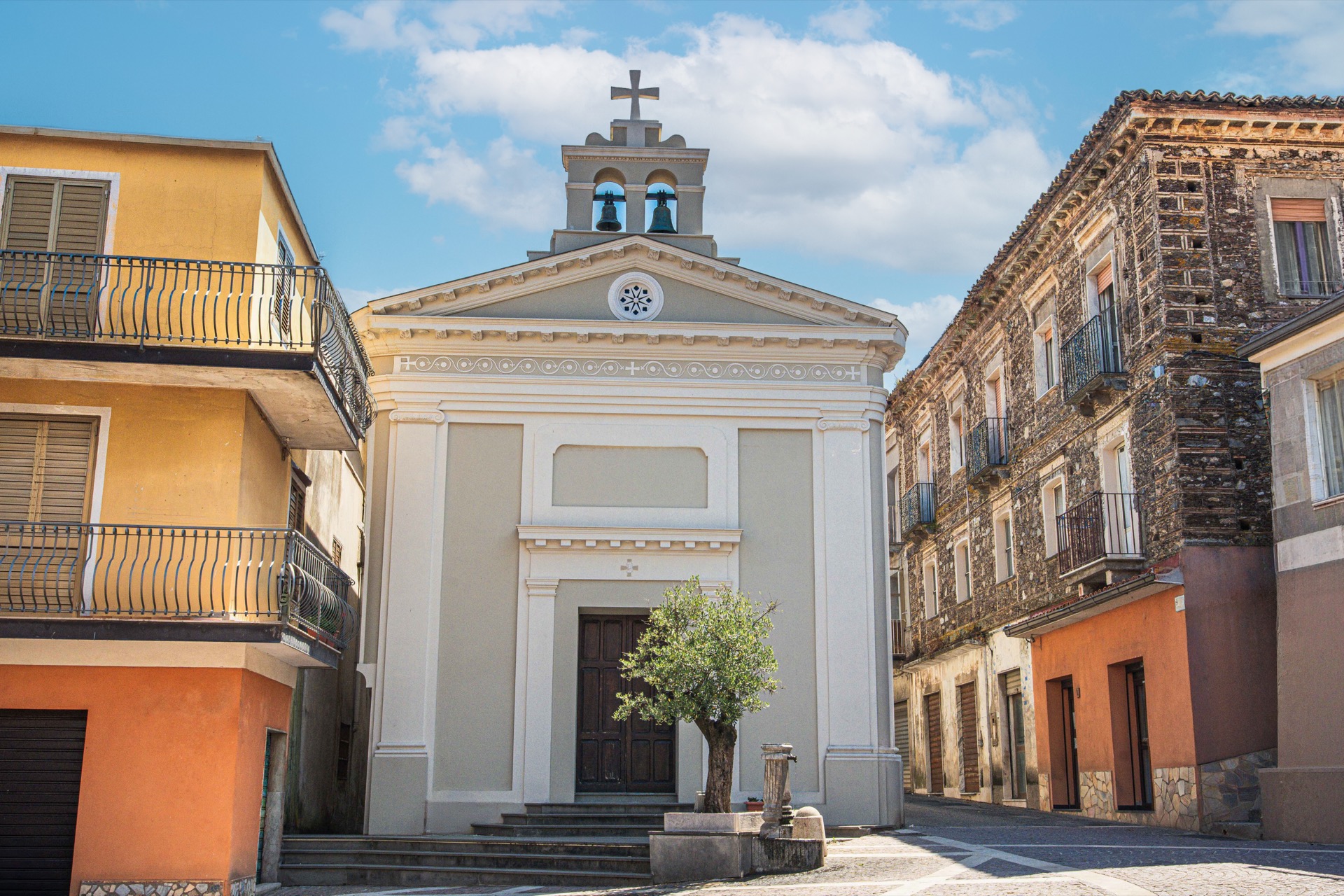
Nel fitto intreccio dei vicoli di San Pietro a Maida, la Chiesa di San Giovanni Battista emerge come una presenza discreta, profondamente legata alla storia del paese. Le origini, databili al XV secolo, portano con sé i segni di una lunga storia fatta di terremoti e ricostruzioni, fino al restauro nel 2020, che ne ha restituito la piena fruibilità e il ritorno al culto.
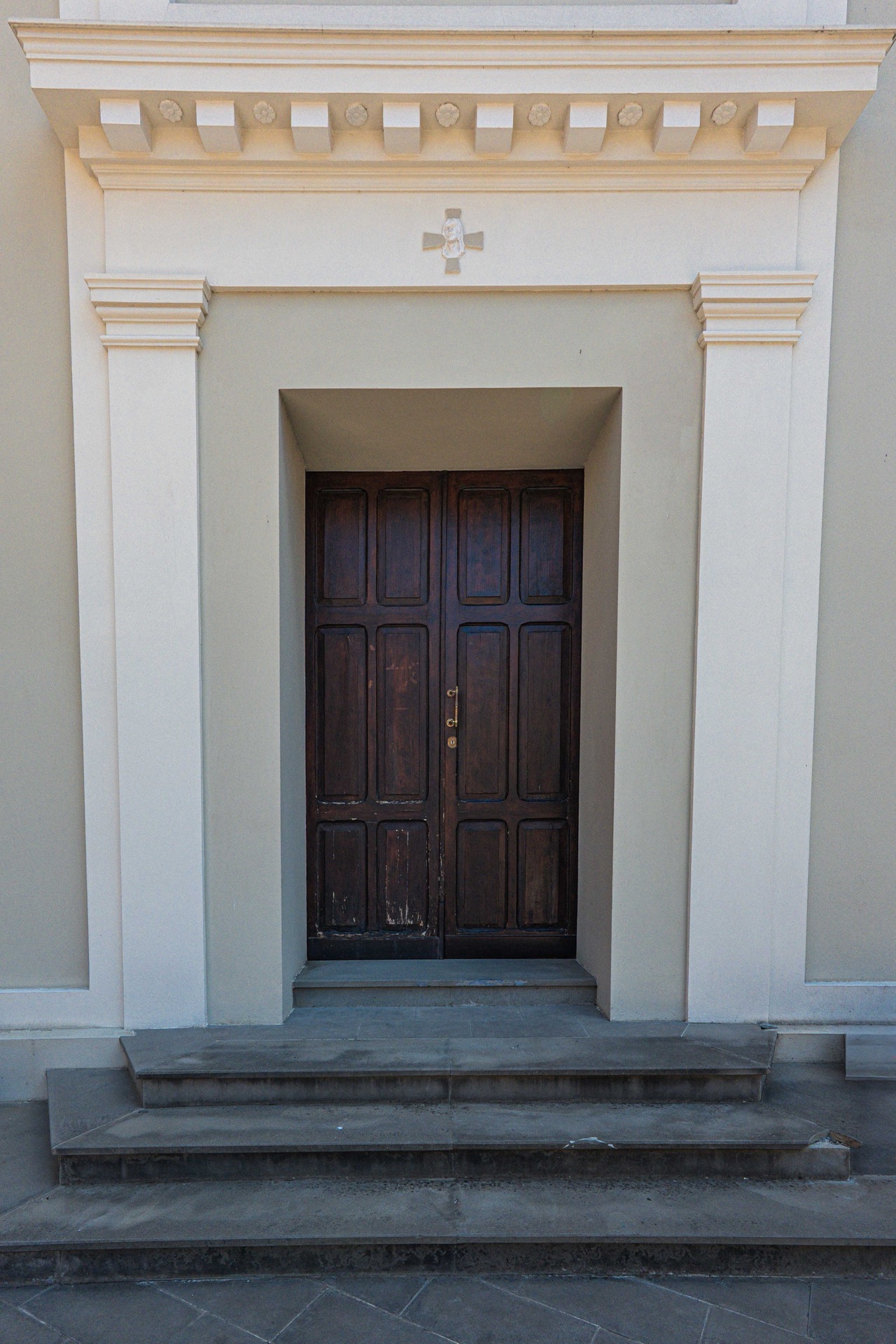
La facciata, ristrutturata nei primi anni ’90, riprende solo in parte il linguaggio architettonico della ricostruzione settecentesca: il portale squadrato è incorniciato da due lesene laterali sormontate da capitelli in stile ionico, mentre il timpano accoglie una finestra circolare.
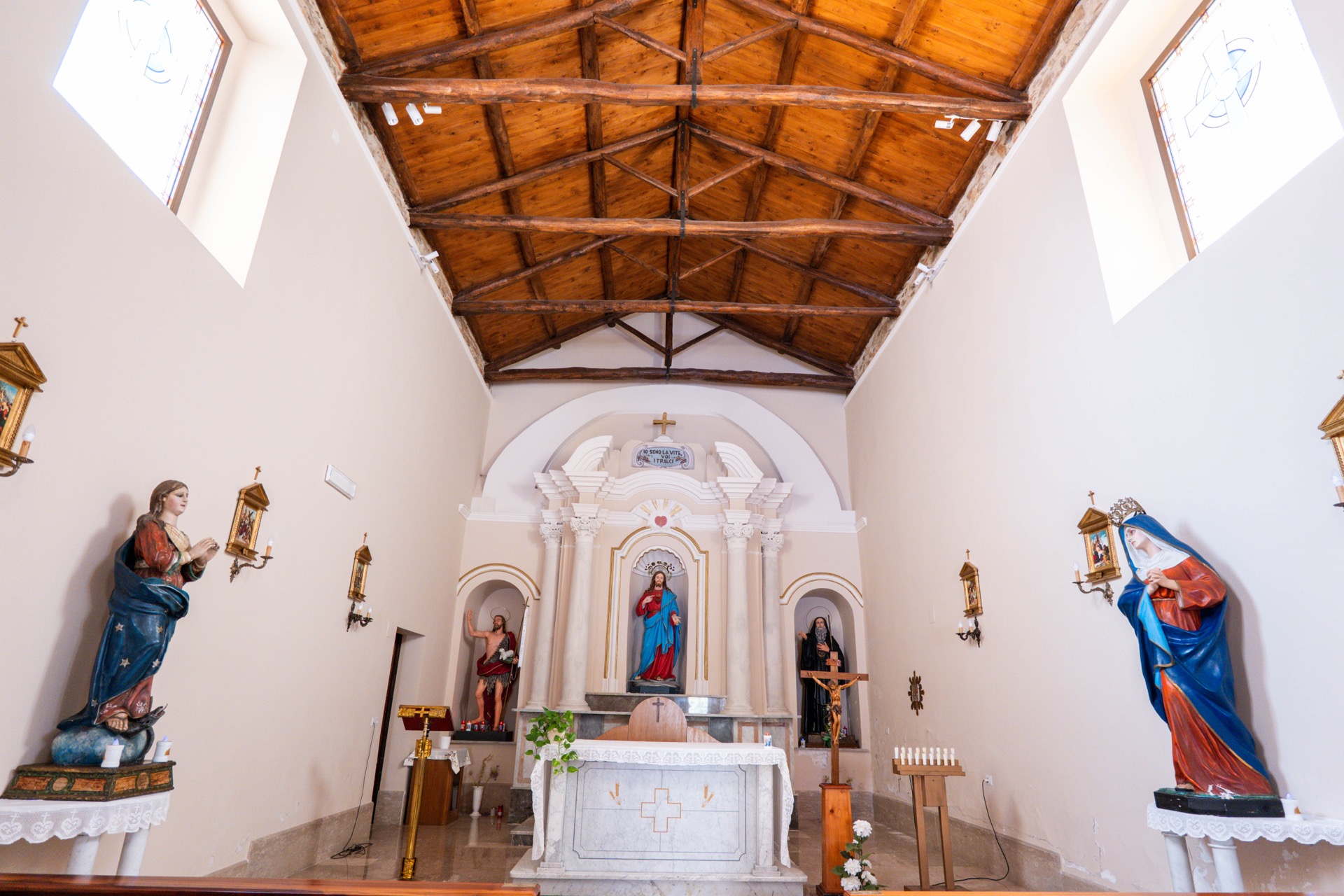
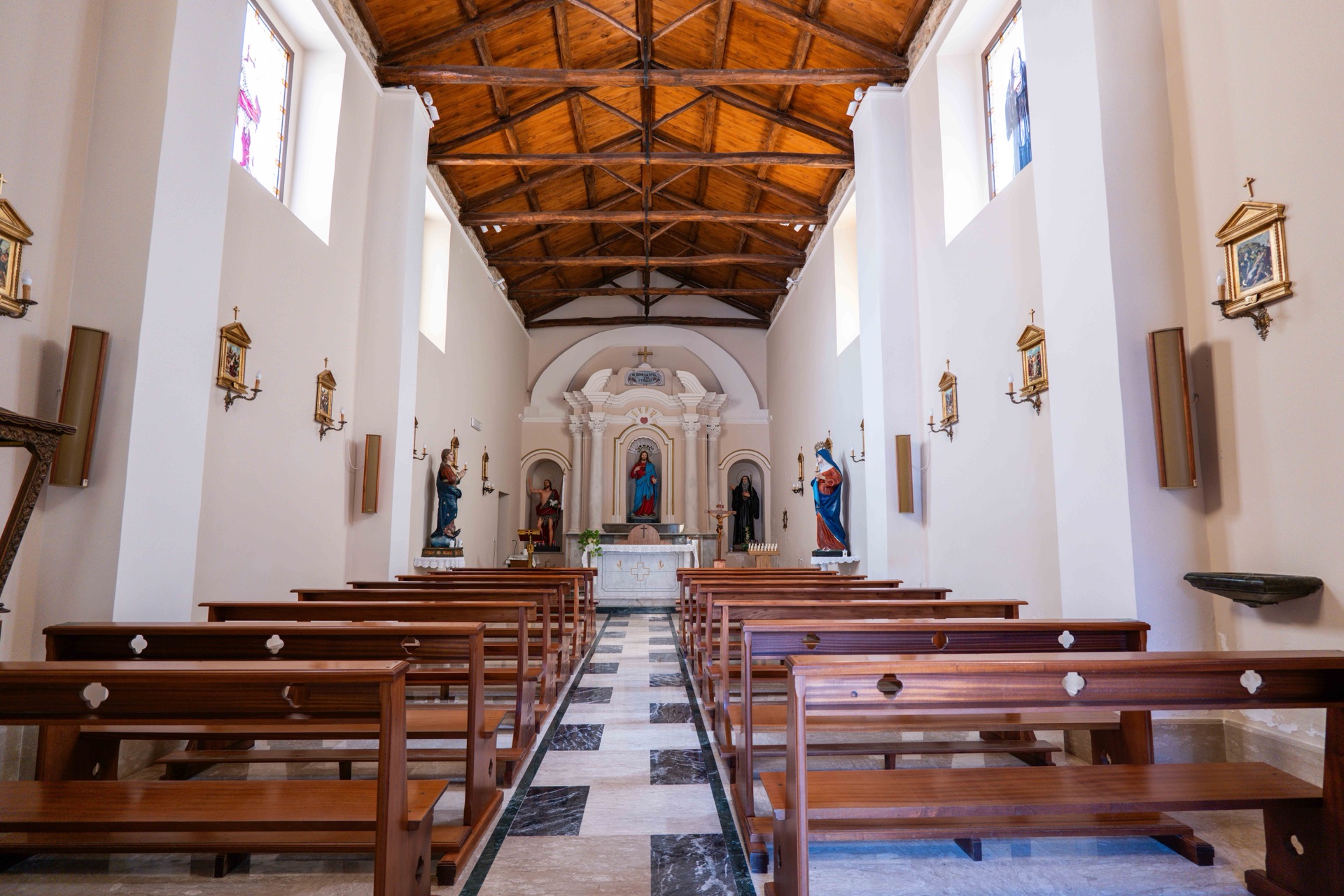
L’interno è a navata unica, con un altare maggiore a doppio ordine di colonne marmorizzate in stile corinzio e nonostante le dimensioni raccolte dell’ambiente, l’impianto architettonico accentua la profondità dello spazio e la sua solennità.
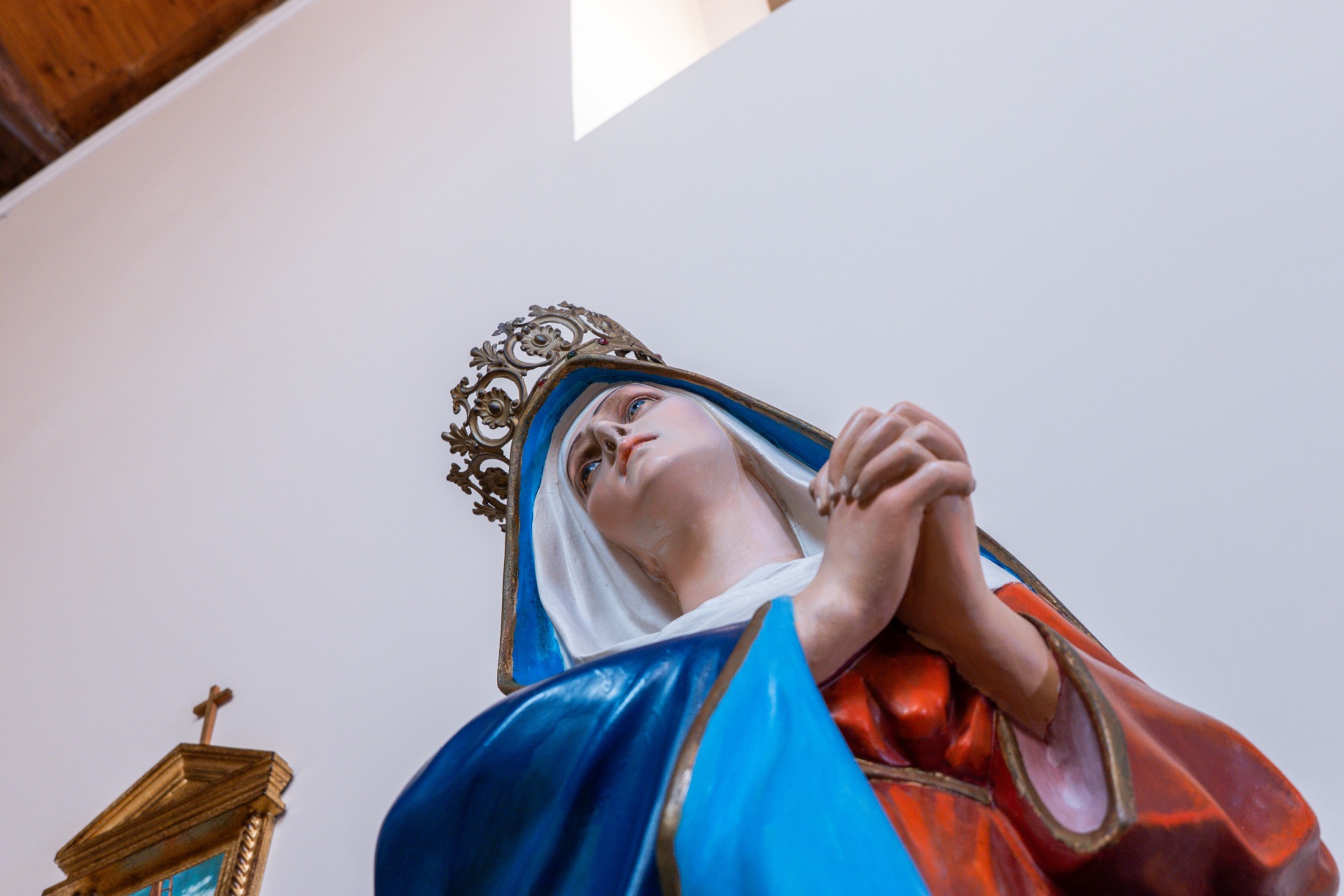
Sull’altare le statue del Sacro Cuore di Gesù, di San Francesco di Paola e di San Giovanni Battista mentre nelle nicchie laterali si collocano l’Addolorata e l’Immacolata e sotto l’altare il Gesù Morto.
Il soffitto, affrescato nel 1995 con la Madonna tra San Giovanni Battista e San Francesco di Paola, è stato riportato alla struttura originaria, lasciando le capriate lignee a vista e restituendo all’ambiente un carattere più essenziale e suggestivo.
Alla fine del Cinquecento la chiesa era centro di aggregazione di una confraternita che contribuì alla nascita dello Spedale di San Giovanni, detto Ospedale dei Poveri, fuori dall’abitato. Un’esperienza che riflette il ruolo della chiesa come centro spirituale e insieme sociale della comunità.
Informazioni pratiche
- Momento ideale: sempre
- Accessibilità: situata nel centro storico in Via Nicotera, è raggiungibile a piedi dalla piazza principale. L’accesso non presenta particolari barriere architettoniche.
- Cultura locale: San Pietro a Maida è Città dell’Olio, dove la varietà Carolea trova uno dei suoi territori più rappresentativi. Il centro storico si articola nelle carrere, i vicoli che collegano i catogi, le case della tradizione contadina, e nel Muro della Memoria con i grandi bassorilievi in terracotta refrattaria degli scultori Francesco e Fortunato Violi, che raccontano storia e identità del borgo.
- Itinerario consigliato: dalla chiesa scendi verso la piazza principale per ammirare la Chiesa Matrice di San Nicola di Bari, con la facciata neogotica e i tre portali a sesto acuto. Percorri le carrere tra porte dipinte e bassorilievi dei Violi. Poco fuori l’abitato, in un’atmosfera completamente diversa, trovi l’Eremo di Santa Maria del Carmelo e il Cimitero Monumentale. Nella bella stagione scendi a valle lungo il torrente Ugolio, tra gli antichi mulini e i trappeti immersi nell’argento degli ulivi.
In the heart of the Tyrrhenian coast of Calabria, amid olive groves and ridges overlooking the Gulf of Sant’Eufemia, San Pietro a Maida lies on a plateau 355 meters above sea level, in the hinterland of the Tyrrhenian side of the Serre Plateau, dominated by Mount Contessa. Far from the most popular tourist routes, it gradually reveals itself to nature lovers, with mountain biking trails immersed in a landscape of lush hills.
In accordance with Gabriele Barrio, the town was founded in the 16th century, when a colony of workers settled in the area to carry out land reclamation work on the nearby Maida estate; according to the Renaissance scholar, this circumstance also explains the origin of the name. Furthermore, its origins lie in a more ancient and elusive past. As early as around the year 1000, the area was frequented by Basilian monks, who for a long time marked this stretch of Calabria with settlements in isolated places far from coast, where the connection between the landscape and spirituality is still evident. This landscape includes the Hermitage of Santa Maria del Carmelo and the Monumental Cemetery.
From the 15th century onward, Sancto Petro de Mayeda grew into an agricultural center, thanks to its inland location, which sheltered it from raids and malaria-ridden areas.
Around the town square, a dense network of narrow alleys, known locally as carrere, winds its way, weaving between the catogi, the traditional farmhouses.
And a little further downstream, along the Ugolio stream, a network of mills and olive presses supports the local economy. Even today, the Via dei Mulini still offers glimpses of this landscape that runs alongside the watercourse. It is no coincidence that San Pietro a Maida is one of the “Città dell’Olio” (Oil Cities), where the Carolea olive variety thrives in one of its most representative regions.
The townscape is enhanced by large terracotta bas-reliefs by the sculptors Francesco and Fortunato Violi, which depict scenes from village life, sculptural reliefs set within terracotta frames and scattered throughout the village.
The Church dedicated to San Nicola di Bari has been an integral part of the community’s spiritual life for centuries. Built around the 15th century on the ruins of the ancient Abbey of San Pietro, it features a Neo-Gothic façade. Inside, three naves are marked by round arches that guide the eye to the high altar, the heart of the devotion to the Bishop of Myra, which remains deeply rooted in the community to this day.
The journey through the town’s religious heritage continues with the Church of San Giovanni Battista, one of the town’s most important historical landmarks. Dating back to the 15th century, it features an imposing Baroque façade, adorned with sculptures and decorative details. After years of consolidation and restoration work, the building once again welcomed worshippers when it reopened for services in July 2020. Inside, the church preserves finely decorated altars and exquisite frescoes.
Just outside the town, the Hermitage of Santa Maria del Carmelo lies in a secluded spot, enveloped in silence. The entrance staircase and the arcaded portico lead into a simple, single nave interior that still resonates with devotion to Madonna del Carmelo. Next to it, the Monumental Cemetery is spread over several levels, featuring crypts, frescoes, and graves dating back centuries.
San Pietro a Maida is a village that has undergone profound changes through the centuries. The devastating earthquakes of 1638, 1783 and 1905 reshaped the city, leaving an indelible mark on its history. In 1860, it was witness to an episode that has left its mark: Giuseppe Garibaldi stopped there during his march toward the Volturno, marking San Pietro a Maida’s entry into Italy’s great history.
Today, it is an unspoiled corner of Calabria, a haven of authenticity, a place where time seems to pass more slowly, yet with the same strength as ever.
Final Stage on the itinerary is the wildlife exhibition “La Favola Siamo Noi”, nestled in the greenery of the Corda Plateau, offering visitors a close-up encounter with the animal world that brings a sense of discovery and wonder to the area.
The Monumental Cemetery of Carmelo
The Monumental Cemetery of Carmelo is one of the oldest burial grounds in Calabria, recognized as a monumental cemetery of exceptional historical and architectural value by the Superintendence of Archaeology, Fine Arts, and Landscape. Its origins date back at least to the 13th century, with evidence of even earlier burials, dating to the 12th century, which make it one of the most historically significant burial sites in Southern Italy.
The complex stands on a site chosen by the Basilian monks for its protected position, far from the coast and passageways. In this place sobriety, solitude, and prayer were at the heart of their intense monastic life. Even today, these places are enveloped in the same silence that separates them from the distractions of the outside world; these same places preserve that sense of serenity that the monks found in asceticism and in their deep connection with the divine.
The site is laid out over three levels, each with a specific function and its own historical context. The oldest crypts, which are of the greatest historical and artistic value, are located on the top level and are adorned with frescoes painted directly onto the plaster.
It is precisely in this part of the complex that the greatest vulnerability is currently evident, and it is here that one of the historic chapels recently partially collapsed.
On the central landing, however, stands the cemetery chapel, with an altar and the remains of the side benches. This level is accessed via a staircase with wide steps made of local stone, the same stone used for the cloister of the Hermitage of Carmel, which leads to the wrought-iron entrance gate, likely dating from the 19th century. The middle level houses crypts and individual tombs, mostly dating from the 15th century, characterized by architectural and symbolic elements of great interest.
Finally, on the lowest level there are underground burials, some of which show clear signs of having been desecrated over time. Within and around the monumental complex, extraordinary centuries-old oak trees enhance the site’s significance.
The Carmelo Cemetery is one of the last examples of a completely monumental cemetery, that has remained unchanged over time. Conservation efforts have preserved its authenticity, making it an invaluable heritage.
Practical information
- Ideal moment: always, during daylight hours. The silence of the place and the light filtering through the branches of the ancient oak trees create a truly unique atmosphere.
- Accessibility: it is an historic complex with architectural barriers.
- Local Culture: San Pietro a Maida is known as the “City of Oil,” where the Carolea variety produces one of Italy’s finest olive oils. The village reflects its rural heritage in the “catogi”, the ancient, low-lying single-story houses, and in the “carrere”, the narrow alleys that connect them, as well as in the Wall of Remembrance, featuring panels of fire-resistant terracotta that celebrate manual labor.
- Recommended itinerary: visit the Hermitage of Carmel, located just a few steps from the cemetery. Legend has it that the Our Lady stopped the earthquake, preventing the mountain from burying the village’s houses. Continue toward the historic center and the Church of San Nicola di Bari. San Pietro a Maida is centrally located, making it easy to travel both toward the Tyrrhenian, with Pizzo Calabro as the first destination, and the Ionian coast via Squillace, reaching Stalettì and Soverato.
The Church of San Nicola di Bari
The Church of San Nicola di Bari has been part of the history of San Pietro a Maida for centuries.
Built around 1400 on the ruins of the ancient Abbey of San Pietro, the church reflects a long history of renovations, evident today in its facade, which was rebuilt in 1931 in the Neo-Gothic style. The most striking feature is the church’s main facade, marked by three finely crafted pointed-arch portals, with the central one surmounted by a rose window featuring floral motifs. Following the renovation of the facade, a clock and the three smaller bells were installed on the right upper side, while on the left side a system with larger bells, which attract the eye upward and reinforce the facade’s presence in the urban landscape.
The interior preserves a Romanesque style. The three naves are separated by round arches which create a regular and continuous rhythm until the presbytery. Here, the high altar, completely rebuilt in 1958 in marble, becomes the heart of the liturgical space. On the right side, however, is the side altar (clearly of Marian origin), completely decorated with gilded stucco following recent restoration work, and atop which stands the statue of San Nicola di Bari depicted with the three resurrected children, one of the most well-known themes in the iconographic tradition of the Bishop of Myra.
The church archive preserves registers of the sacraments dating back to 1612, a documentary sequence spanning the centuries that provides an uninterrupted account of the community’s religious life.
Practical information
- Ideal moment: always, but especially during the Feast of the Saint on 6 December, when the church dresses up for the occasion.
- Accessibility: the church is located in the historic center and it is within easy walking distance of the main square. Accessible.
- Local Culture: San Pietro a Maida is known as the “City of Oil,” where the Carolea variety produces one of Italy’s finest olive oils. The village reflects its rural heritage in the “catogi”, the ancient, low-lying single-story houses, and in the “carrere”, the narrow alleys that connect them, as well as in the Wall of Remembrance, featuring panels of fire-resistant terracotta that celebrate manual labor.
- Recommended itinerary: after visiting the Mother Church, lose yourself in the center “carrere” to admire the pictured doors and the Wall of Remembrance. Far away from the village, visit the Hermitage of Carmelo and the Monumental Cemetery, or follow the sound of the water along the Ugolio stream to discover the ancient mills and oil mills nestled among the silvery olive trees.
The Hermitage of Santa Maria del Carmelo
Standing on the hills overlooking the Gulf of Sant’Eufemia, the Hermitage of Santa Maria del Carmelo in San Pietro a Maida is a captivating complex for its position and its enduring connection with the community. A place on the edge, suspended between the spiritual realm and the landscape, it leaves a lasting impression on all who visit.
Its origins date back to the 16th century, however, the site has been inhabited for much longer. Here there was certainly already a Marian devotion, not Carmelite, probably linked to the presence of Basilian monks.
Over time, the hermitage has undergone interventions and reconstructions, including the earthquakes that devastated Calabria, by assuming a sober minimalist architectural style, devoid of decorative excess but rich in charm.
The facade is defined by the stone portal and the central rose window, while the bell tower rises as a subtle landmark in the landscape, making the complex recognizable even from a distance.
On the left side, there is an arcaded portico that refers to the original function of a place of welcoming and rest for pilgrims.
The facade, bell tower and portico were reconstructed in the late 1980s by local craftsmen.
At the front, the churchyard and the staircase lead to the entrance in an almost ritualistic development, opening up to an intimate and unexpected dimension.
The interior (reconstructed in the late 1980s), with a single nave, is highlighted by a decorated coffered ceiling crafted by local artisans, which lends a sense of order and depth.
But the focus is on the high altar, where the venerated image of Madonna del Carmelo is enshrined. The side niches house Statues of San Giuseppe and the Risen Christ, which complete the iconographic arrangement.
The devotion to Madonna del Carmelo, which remains deeply rooted to this day, is also nourished by folk tales and traditions that attribute episodes of collective protection to her intercession.
Outside, beside the hermitage, lies the ancient monumental cemetery, with Medieval origins in use until the 1950s. The graves enrich the complex from a historical perspective and preserve its collective memory.
Practical information
- Ideal moment: always. It is a peaceful place where you can fully enjoy the spirituality of the site and the view.
- Accessibility: it is located outside the town centre, it has a wide front space and the access to the church does not have particular architectonic barriers.
- Local Culture: the devotion to Madonna del Carmelo is connected with the remembrance of earthquakes. Legend has it that the Our Lady stopped the mountain preventing it from burying the village houses, a miracle that lives on today in the community’s stories. San Pietro a Maida is known as the “City of Oil,” where the Carolea variety produces one of Italy’s finest olive oils. The village reflects its rural heritage in the “catogi”, the ancient, low-lying single-story houses, and in the “carrere”, the narrow alleys that connect them, as well as in the Wall of Remembrance, featuring panels of fire-resistant terracotta that celebrate manual labor.
- Recommended itinerary: continue toward the ancient Monumental Cemetery, a little architectural jewel and one of the most ancient complex documented in Calabria. From here, head down to the historic center to visit the Church of San Nicola di Bari, the narrow streets with their painted doors, and the Wall of Remembrance. In the beautiful season, take the opportunity to go on a lovely hike down into the valley along the route of the old mills and olive presses.
The Church of San Giovanni Battista
In the dense network of alleys in San Pietro a Maida, the Church of San Giovanni Battista stands as a discrete presence, deeply linked to the history of the country. The origins, back to the 15th century, take the marks of long history made of earthquake and reconstructions, until the restoration in 2020, which returned the full accessibility and the resumption of worship.
The façade, renovated during the early 1990s, only partially resumes the architectonic language of the 18th century reconstruction: the square portal is flanked by two pilasters topped with Ionic capitals, while the pediment features a circular window.
The interior consists of a single nave, with a high altar featuring two rows of marbled Corinthian columns; despite the intimate size of the space, the architectural structure accentuates its depth and solemnity.
The altar houses the Statues of the Sacred Heart of Jesus, San Francesco di Paola and San Giovanni Battista, while the side niches house the Addolorata (Our Lady of Sorrows) and the Immaculate Conception, and beneath the altar stands the Dead Christ.
The roof, frescoed in 1995 with the Our Lady between San Giovanni Battista and San Francesco di Paola, has been restored to its original form, leaving the wooden trusses exposed and giving the space a more minimalist and evocative character.
At the end of the 16th century, the church was a social gathering place for a brotherhood which contributes to the birth of the Spedale di San Giovanni, known as Ospedale dei Poveri (Hospital for the Poor), outside the village. This is an experience that reflects the role of the church together as a spiritual and social center of the community.
Practical information
- Ideal moment: always
- Accessibility: located in the historical center in Via Nicotera, it is within walking distance of the main square. There are no significant architectural barriers to access.
- Local Culture: San Pietro a Maida is known as the “City of Oil,” where the Carolea variety thrives in one of its most representative regions. The historical center is articulated in “carrere”, alleys that connect the “catogi”, the traditional farmhouses, and the Wall of Remembrance, featuring large bas-reliefs in fireclay by the sculptors Francesco and Fortunato Violi, which tell the story of the village’s history and identity.
- Recommended itinerary: from the church, head down toward the main square to admire the Mother Church of San Nicola di Bari, with its Neo-Gothic façade and three pointed-arch portals. Stroll through the carrere among painted doors and bas-reliefs by the Violi family. Just outside the town, in a completely different atmosphere, you can find the Hermitage of Santa Maria del Carmelo and the Monumental Cemetery. In the beautiful season, head down into the valley along the Ugolio stream, among the old mills and oil mills nestled among the silvery olive trees.